
What BMW Brand Strategy Gets Right
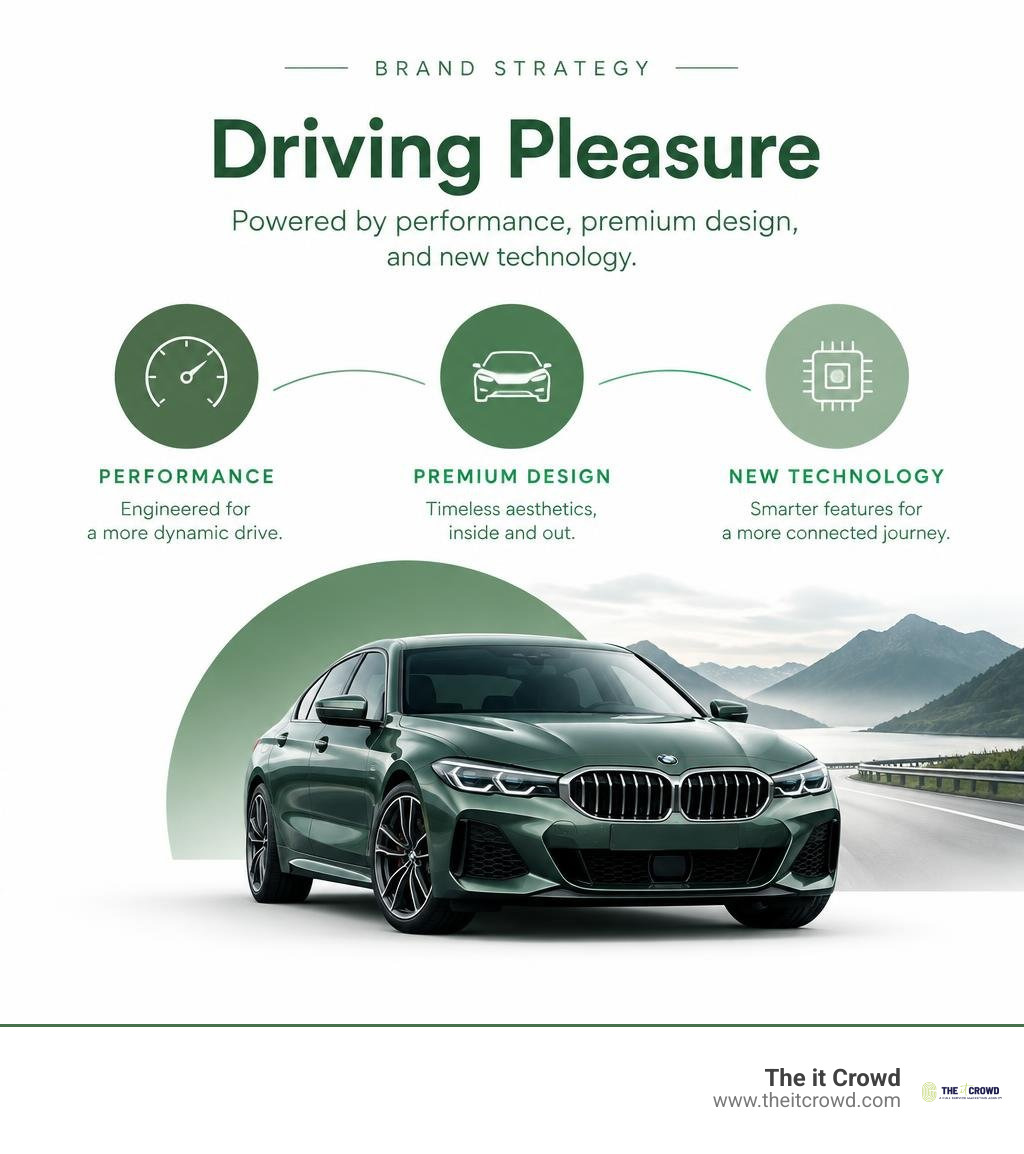
BMW brand strategy keeps one promise at the center: driving pleasure. BMW backs that promise with performance engineering, premium design, and an ownership experience that now includes electric vehicles, connected services, and software updates. Its approach is to make new technology feel like part of a BMW, not a break from what drivers already value.
That balance matters beyond the auto industry. A clear brand promise gives product teams and marketers a way to make consistent choices, even as customer needs change. This case study looks at how BMW puts that idea to work across its vehicles, marketing, and global portfolio.
I’m Lindsey Huettner, owner of The it Crowd, and I’ve spent over 19 years helping businesses connect branding with digital marketing. I’ll use that experience to break down BMW brand strategy into lessons you can apply to your own positioning.
BMW stands among the top 10 brands in the world, backed by formidable operational momentum. In 2025, the BMW Group delivered over 2.46 million vehicles worldwide, with fully electric battery electric vehicle (BEV) sales reaching an all-time high of 442,000 units—accounting for 17.9% of total group deliveries. Backed by its signature Bavarian Blue (#0064B2) corporate visual identity and over a century of precision engineering, the company provides a textbook masterclass in sustaining premium market leadership during industry disruptions.
Core Pillars of the Modern BMW Brand Strategy
At the heart of the BMW brand strategy lies a deliberate balance between foundational heritage and forward-looking innovation. Rather than abandoning its historical assets during the automotive industry’s shift toward electrification and autonomous driving, BMW anchors its global identity around the core German concept of Freude (Joy) and the globally recognized promise of “Sheer Driving Pleasure” (marketed across North America as “The Ultimate Driving Machine” since 1973).
From a brand psychology perspective, BMW embodies the Ruler archetype—projecting authority, prestige, and mastery—supported by the intellectual depth of the Sage and the pioneering curiosity of the Explorer. This identity forms the foundation for effective brand positioning that protects premium pricing power against both legacy competitors and digital-native newcomers.
As detailed in the corporate MANAGEMENT REPORT, BMW structures its modern strategy across three clear strategic pillars:
- Exclusivity and Leadership: Delivering high-touch craftsmanship, bespoke services, and elevated design cues for demanding high-net-worth individuals (HNWIs).
- Tech Magic & Intelligent Connected Vehicles: Seamlessly embedding artificial intelligence, ambient software, and connected services into the vehicle cabin without overwhelming the driver.
- Human-Centric Freude: Ensuring that every technological upgrade ultimately serves human emotion, connection, and dynamic driving control.
Sheer Driving Pleasure Meets Tech Magic
For decades, automotive luxury was measured primarily through mechanical components: engine displacement, transmission smoothness, and leather upholstery. Today, luxury is increasingly defined by software performance and frictionless connectivity.
BMW’s answer is “Tech Magic”—a digital philosophy designed to delight drivers without turning the dashboard into a distracting wall of generic menus. A central element of this ecosystem is the My BMW App, which boasts over 12.3 million active users worldwide and holds an industry-leading 4.8-star rating. The application functions as an essential bridge between owner and vehicle, handling remote charging schedules, climate pre-conditioning, digital key sharing, and service management.
At The it Crowd, we often discuss why emotional branding builds loyalty, and BMW demonstrates this concept clearly. By integrating voice-activated AI personal assistants and deploying over 160 over-the-air (OTA) software updates across 12 million connected vehicles since 2019, BMW keeps older models feeling fresh while establishing recurring post-purchase relationship touchpoints.
Sustainability and Circular Economy Integration
A major challenge facing legacy premium manufacturers is integrating environmental responsibility without diluting high-performance prestige. BMW addresses this challenge directly by embedding circular design and carbon accountability across its entire value chain, targeting complete net-zero emissions across its product lifecycles by 2050.
According to the BMW Group IR Presentation, the company has established strict, science-based Scope 1, 2, and 3 reduction targets. By transitioning 100% of its global production facilities to green electricity and constructing dedicated battery-cell recycling competence centers, BMW recovers key raw materials—including nickel, cobalt, and lithium—to feed closed-loop manufacturing cycles.
| Strategic Metric | Legacy Powertrain Baseline | Neue Klasse & Modern Sustainable Benchmark | Strategic Brand Impact |
|---|---|---|---|
| Powertrain Carbon Intensity | High tailpipe & supply chain emissions | 0 g/km tailpipe (Class A rating on i5/i7); -40Mt lifecycle CO2e by 2030 | Repositions luxury as clean status |
| Recycled Material Content | <15% secondary raw materials | Up to 50% circular secondary materials in new vehicle lines | Establishes circular economy leadership |
| Electrical Architecture | 400V standard vehicle systems | 800V high-voltage architecture (400 km range added in 10 mins) | Eliminates consumer charging anxiety |
| Software Management | Dealer-serviced hardware modules | Centralized Software-Defined Architecture with continuous OTA | Turns vehicle into an upgradable asset |
Heritage and Innovation: Balancing ‘The Ultimate Driving Machine’ with Digitalization
How does a manufacturer celebrate over 100 years of engine manufacturing while building software-defined electric platforms? BMW achieves this balance through strategic storytelling that treats engineering heritage as active brand equity rather than nostalgia.
Features like ideal 50:50 axle weight distribution, rear-wheel-drive dynamics, and driver-oriented cockpit geometry are treated as core brand philosophies. When BMW engineers an all-electric sedan or crossover, these mechanical principles remain intact, reassuring traditional driving purists while welcoming tech-forward adopters.
This sustained engineering authority is backed by substantial investments: in 2025 alone, BMW Group allocated €8.3 billion to research and development, alongside €377.5 million invested in workforce education to reskill its 155,000 employees across 110 nations. This approach reflects why memorable brands stick in consumer psychology—they retain their core identifying signals while continually updating their execution.
The Neue Klasse and Software-Defined Vehicles
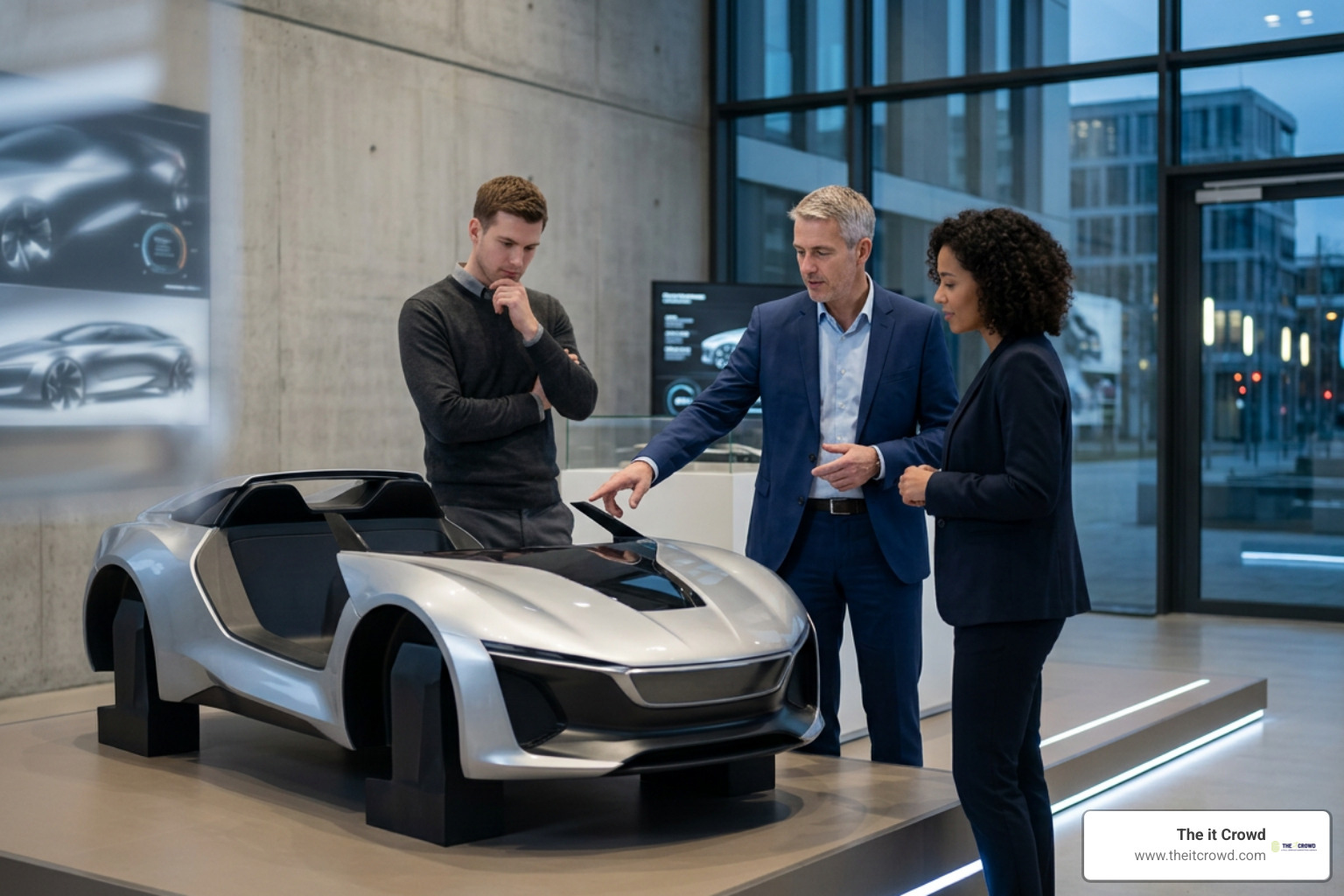
The clearest expression of BMW’s future-oriented strategy is the Neue Klasse architecture. Named after the historic 1960s vehicle family that originally saved and redefined BMW as a modern sports sedan maker, the new platform serves as both a production platform and a technological statement.
The Neue Klasse integrates four centralized high-performance computers—internally dubbed “Superbrains”—to process driving dynamics, automated driving features, infotainment, and battery management simultaneously. With Sixth-Generation eDrive technology delivering up to 30% more driving range (reaching potential ranges up to 906 km) and 30% faster charging speeds via 800V architecture, BMW proves that electrification can enhance dynamic performance. Supporting these high-tech platforms requires the same discipline we apply when designing digital strategy and data analytics architectures: unifying complex data streams into clean, responsive user experiences.
Performance Heritage as Brand Equity
Motorsport is not a secondary marketing hobby for BMW; it is the proving ground that legitimizes its consumer pricing tiers. Established in 1972, the BMW M Division (Motorsport) transformed track-validated racing developments into road-going consumer vehicles.
The M badge has evolved into a recognizable cultural symbol of driving performance. By organizing track days, owner rallies, and digital sim-racing tournaments, BMW nurtures a passionate community of brand advocates. This enthusiast base generates authentic word-of-mouth promotion that broadens the appeal of high-margin performance packages across standard production models.
Portfolio Architecture, Tribal Branding, and Global Consistency
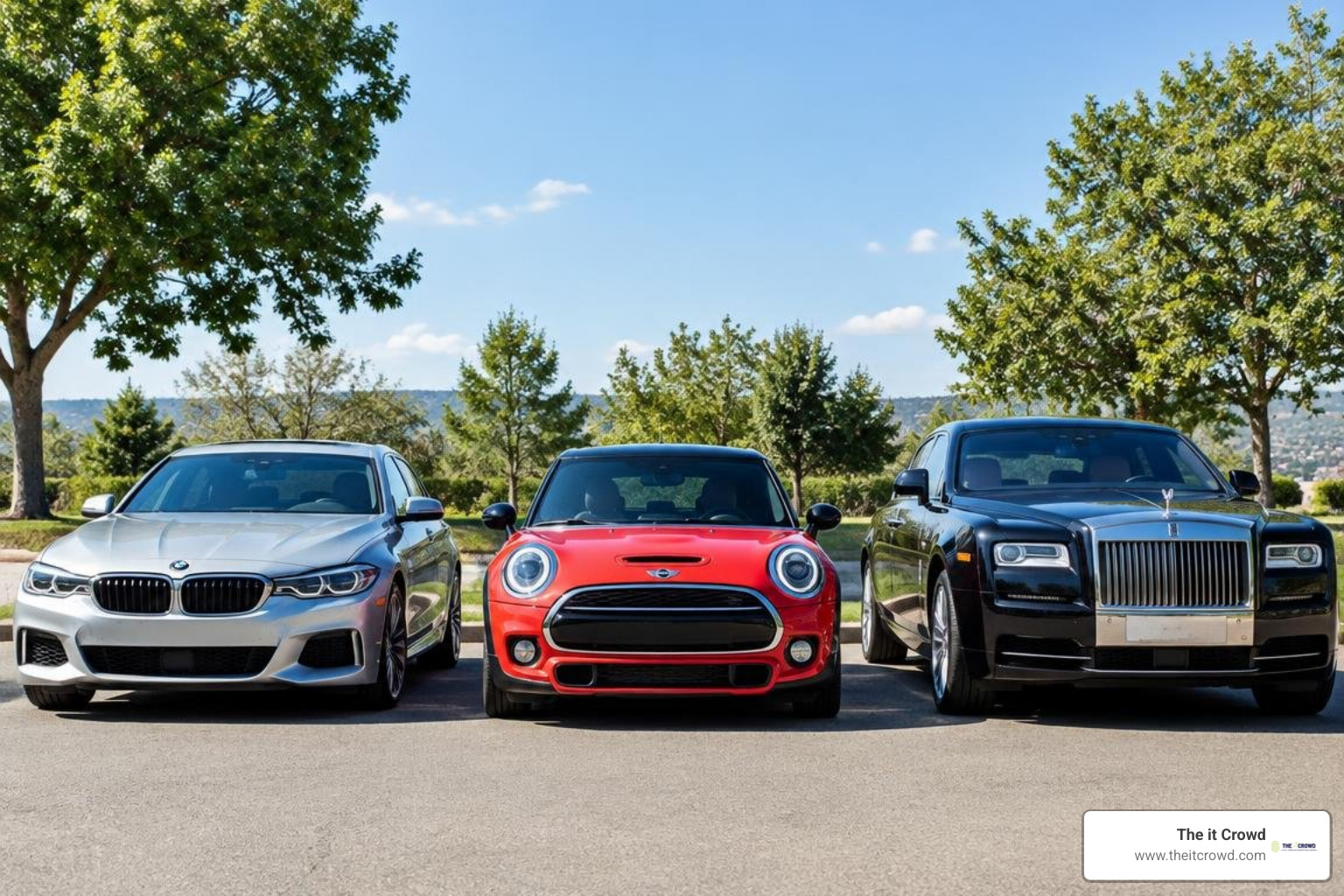
Managing multiple international automotive names requires a structured portfolio architecture to prevent brand overlap. BMW Group operates four distinct brands, each positioned to own a specific market segment without cannibalizing its siblings. Maintaining this balance requires the same disciplined market research and competitive positioning that helps modern enterprises identify distinct audience segments.
How the BMW Brand Strategy Powers Product Portfolio Architecture
Rather than forcing every consumer demographic under a single generic brand banner, BMW Group uses a modular portfolio structure:
- BMW (Masterbrand): The core embodiment of dynamic premium performance, modern luxury, and everyday driving pleasure.
- BMW i: The dedicated technology incubator driving innovations in electrification, sustainable cabin materials, and software-defined mobility.
- BMW M: The high-performance division engineered for motorsport purists and dynamic street performance.
- MINI: Expressive, urban, design-led mobility focusing on compact agility, distinct personality, and community-driven driving fun.
- Rolls-Royce: The absolute pinnacle of bespoke, ultra-luxury craftsmanship, offering effortless, whisper-quiet travel for high-net-worth clients.
- BMW Motorrad: Premium two-wheeled performance and adventure touring motorcycles that bring the spirit of Freude to open-road enthusiasts.
| Brand / Sub-Brand | Primary Target Demographic | Core Value Proposition | Primary Archetype |
|---|---|---|---|
| BMW Core Series | Executive professionals, tech adopters | Dynamic performance, intelligent luxury | Ruler / Sage |
| BMW i | Eco-conscious progressives, tech innovators | Sustainable, zero-emission connected driving | Visionary / Explorer |
| BMW M | Track enthusiasts, performance purists | Uncompromising motorsport power and precision | Hero / Warrior |
| MINI | Creative urbanites, design trendsetters | Playful agility, iconic urban styling | Jester / Creator |
| Rolls-Royce | Global ultra-HNWIs, cultural leaders | Bespoke, peerless, whisper-quiet luxury | Sovereign / Ruler |
| BMW Motorrad | Adventure seekers, touring enthusiasts | High-performance open-air thrill and freedom | Explorer / Outlaw |
Regional Adaptation and Global Alignment in BMW Brand Strategy
Maintaining global brand coherence while adapting to local consumer cultures is a classic marketing challenge. BMW solves this by pairing a “Local-for-Local” manufacturing and operational footprint (running 33 production facilities across 18 countries) with culturally tuned marketing narratives.
- China: Consumers prioritize in-cabin digital ecosystems, ambient lighting, artificial intelligence voice assistants, and generous rear-seat legroom for chauffeured driving. BMW tailors its regional UI design, integrates local app platforms, and extends wheelbase configurations for Chinese market editions.
- United States: American motorists demand bold highway presence, dynamic acceleration, and versatile high-capacity utility vehicles. BMW responds with its high-performance X-series sports activity vehicles produced directly in Spartanburg, South Carolina.
- Europe: Driven by urban density and strict carbon mandates, European buyers favor compact footprints, plug-in hybrids, and zero-emission city efficiency, supported by localized green energy supply chains.
By aligning regional products with overarching corporate values, BMW demonstrates the values-first formula for client loyalty, building trust across diverse international cultures.
The Marketing Mix and Cultural Partnerships Driving BMW’s Growth
BMW’s marketing mix (4Ps) coordinates product engineering, strategic pricing, omnichannel retail, and cultural activations into a unified growth engine:
- Product: A technology-neutral portfolio offering battery-electric, plug-in hybrid, efficient internal combustion, and hydrogen powertrains on shared high-precision architectures.
- Price: Premium value-based pricing that reflects superior engineering, software longevity, and brand prestige.
- Place: A modern omnichannel retail network combining physical flagship boutiques, track-focused Driving Experience Centers, and digital showrooms with in-app configurators.
- Promotion: Culturally integrated storytelling across social media, luxury entertainment placements, high-profile sponsorships, and digital campaigns.
BMW’s social media strategy leads the global automotive sector. With over 39.1 million followers on Instagram, it ranks as the number one car brand on the platform. The brand treats its social channels as dynamic digital galleries, engaging younger car enthusiasts through high-contrast design photography, behind-the-scenes engineering footage, and interactive community showcases. These visual programs show how our team approaches content strategy and campaign implementation—creating engaging, value-led digital content that inspires genuine audience interaction.
Experiential Marketing and High-Impact Content Campaigns
BMW has a rich history of innovative, story-driven content. In 2001, the brand revolutionized online video marketing with “The Hire”, an iconic series of eight short internet action films directed by Hollywood legends like David Fincher and Ang Lee, starring Clive Owen. The campaign demonstrated that treating branded entertainment as cinematic art builds deeper emotional affinity than traditional product advertisements.
BMW continues this tradition of creative, high-impact campaigns today:
- The Walken Commercial: BMW’s viral Super Bowl commercial featuring Christopher Walken alongside Usher used playful self-deprecating humor (“Talkin’ Like Walken”) to introduce the all-electric BMW i5, generating over 60 million cross-platform video impressions within days.
- Das Geschenk (The Present): A heartfelt short film exploring family, memory, and multi-generational connections that positioned BMW as an emotional catalyst for meaningful human moments.
- Festival Activations: Immersive vehicle pop-ups, artistic VIP lounges, and creator-led activations at global cultural hubs like Coachella.
Strategic Partnerships: Art, Cinema, and Tech Leadership
Rather than relying purely on static billboard placements, BMW embeds its brand directly into elite cultural, creative, and technological conversations:
- The BMW Art Car Project: Running since 1975, this program invites celebrated artists—from Andy Warhol and Roy Lichtenstein to contemporary painter Julie Mehretu—to transform endurance race cars into moving canvases, reinforcing the brand’s creative design credentials.
- Art Basel & Cannes Film Festival: Longstanding mobility partnerships with premier global art fairs and film festivals provide VIP electric shuttle fleets, putting BMW models directly in front of international tastemakers and HNWIs.
- Consumer Electronics Show (CES): BMW uses CES to debut forward-thinking concepts, color-changing E Ink body panels, and next-generation heads-up displays, demonstrating its digital tech capabilities to tech-focused audiences.
- Fashion Collaborations: Limited-edition vehicle releases and capsule streetwear apparel collections designed with luxury lifestyle brand Kith introduce the Bavarian brand to younger fashion and design enthusiasts.
Frequently Asked Questions About BMW Brand Strategy
What is the core promise of BMW’s brand strategy?
The core promise of BMW’s brand strategy is delivering “Sheer Driving Pleasure” (Freude am Fahren), marketed across English-speaking regions as “The Ultimate Driving Machine.” This promise means that regardless of powertrain choice—whether traditional internal combustion, plug-in hybrid, or software-driven electric battery—the vehicle must provide responsive handling, dynamic driver connection, and thoughtful ergonomics.
How does BMW balance electrification with its classic performance identity?
BMW balances electrification with heritage by treating electric drivetrains as an opportunity to enhance driving dynamics rather than compromise them. Through its dedicated Neue Klasse platform, Sixth-Generation eDrive technology, and performance-tuned M electric prototypes, BMW uses instantaneous electric torque, low centers of gravity, and intelligent regenerative braking to make electric vehicles handle with the same balance and agility drivers expect from its classic sports sedans.
What are the main brand archetypes representing BMW?
BMW primarily embodies the Ruler archetype, defined by leadership, prestige, precision engineering, and premium market authority. This character is supported by the Sage archetype, reflected in extensive research, software development, and technical problem-solving, alongside the Explorer archetype, which drives continuous expansion into new mobility concepts, sustainable circular materials, and digital vehicle services.
Building Your Own High-Performance Brand Positioning
BMW’s sustained success over the past century highlights a fundamental business truth: lasting brand equity is built by maintaining a clear, unchanging core promise while relentlessly modernizing how you deliver it. By viewing engineering as story-driven brand equity, integrating digital technology without losing the human touch, and organizing its portfolio with precision, BMW continues to lead the global premium automotive category.
Applying these strategic principles to your own market requires aligning your company’s core values, customer experiences, and digital marketing channels. Explore our strategic guide to effective branding dos and don’ts to start refining your market positioning, building lasting brand memory, and driving profitable long-term growth.

