
How to Grow Dallas SEO Traffic That Turns Into Leads
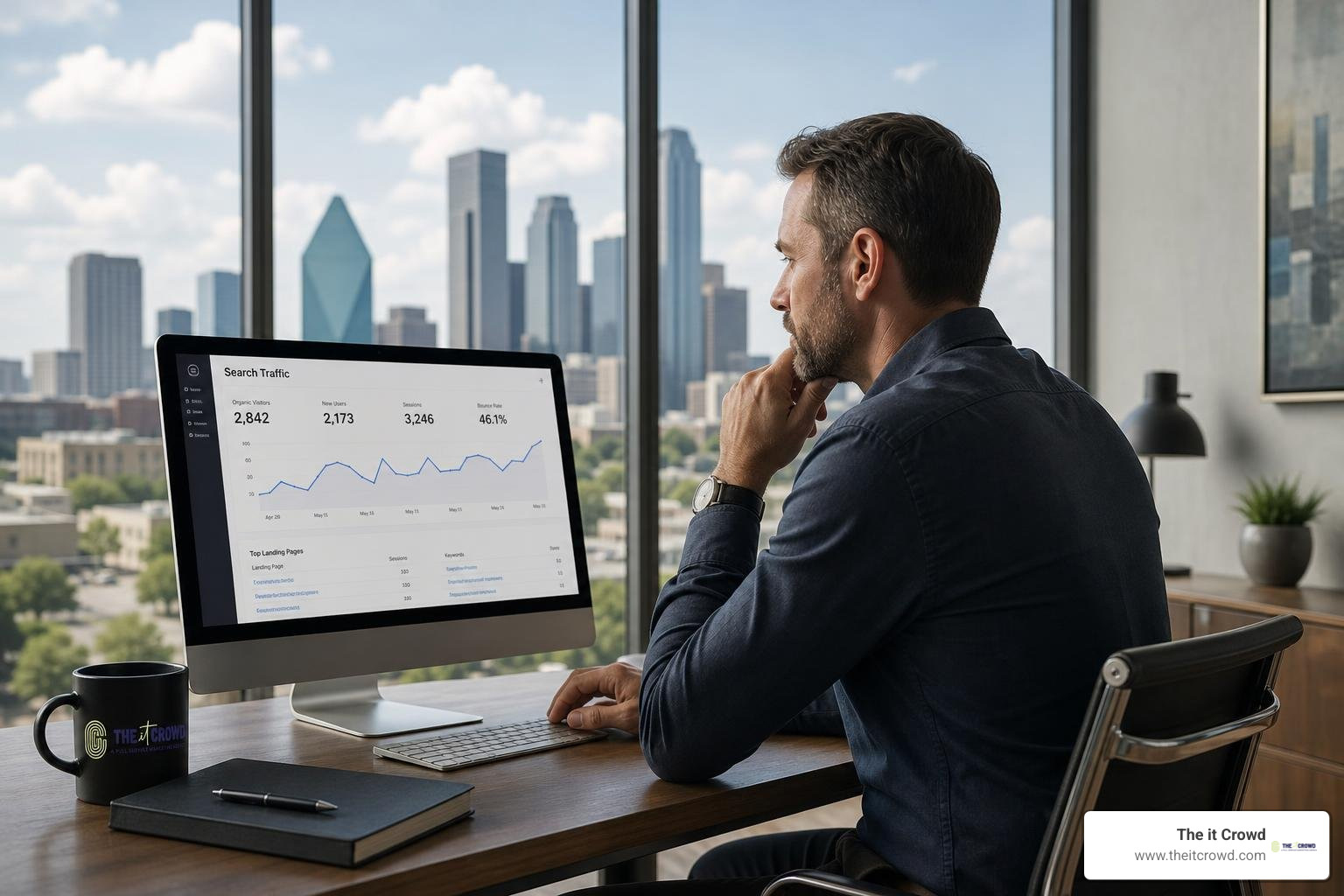
To grow Dallas SEO traffic, build useful pages for each service and area you serve, keep your Google Business Profile current, and earn links from relevant local sites. Then track five numbers each month: organic visitors, local keyword rankings, Business Profile calls, qualified leads, and referring domains. Compare leads with traffic so you know whether better rankings are bringing in customers, not just clicks.
A search for a roofer in Highland Park may be more useful to a contractor than a broad search for “roof repair.” Track those local searches by area, and compare results across seasons so a storm-driven spike does not look like steady growth.
I’m Lindsey Huettner, owner of The it Crowd, a Dallas marketing agency. In more than 19 years of marketing and business ownership, I’ve helped businesses connect SEO, content, and web development to measurable goals—including the Dallas SEO traffic metrics covered here.
Understanding Dallas SEO Traffic: Click Share and Local Search Realities
The Dallas–Fort Worth metroplex is home to more than 7.6 million residents. In such a massive, booming market, consumer behavior has shifted almost entirely to local search. If your business does not appear on page one of Google, you are essentially invisible to prospective buyers. In fact, 73% of homeowners only call contractors and service providers who rank on the first page of Google results.
The distribution of organic clicks across search engine results pages (SERPs) follows a steep drop-off:
- Positions 1–3: Capture a dominant 54.4% of all clicks.
- Positions 4–6: Receive roughly 19.2% of clicks.
- Page Two and Beyond: Settle for a meager 8.1% of total traffic.
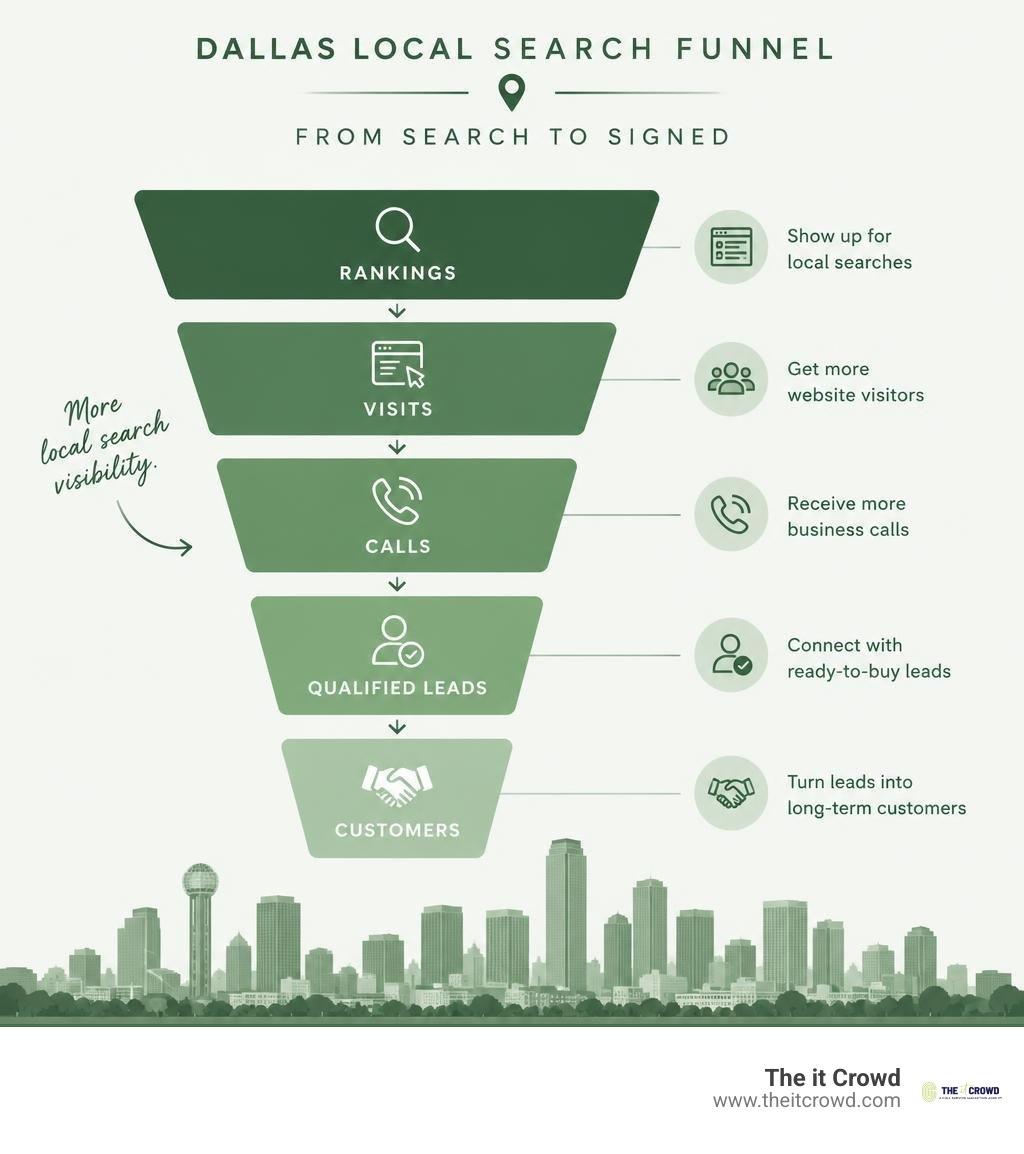
Falling behind in these rankings translates directly to lost revenue. For instance, moving from position two down to position seven for high-value transactional searches can easily cost a local business over $140,000 in missed revenue over a single year. If you find yourself frustrated with your Google ranking, diagnosing where your visibility drops in the local search funnel is the first step toward recovery. Working with a dedicated SEO agency in Dallas helps uncover these gaps, ensuring your technical setup, content strategy, and authority building align with what search algorithms demand in 2026.
Capturing High-Intent Neighborhood Searches to Drive Dallas SEO Traffic
Targeting generic keywords like “contractor near me” or broad regional terms often wastes marketing budget. High-intent, neighborhood-level searches convert at a rate 3.7 times higher than generic regional queries because they represent consumers looking for immediate, local solutions.
Consider the monthly search volume for hyper-local roofing queries across affluent DFW enclaves:
- Highland Park: Generates 1,240 searches monthly for terms like “Highland Park roofer.”
- University Park: Averages 890 monthly searches for specialized local roofers.
- Preston Hollow: Adds another 670 searches each month.
When homeowners search for a neighborhood specialist, they want reassurance that the company understands local building codes, HOA restrictions, and architectural styles. Creating dedicated landing pages tailored to specific communities captures searchers when their buying intent is highest.
Capitalizing on Seasonal Search Spikes in DFW
North Texas weather creates massive, predictable shifts in consumer search patterns. Hailstorms, torrential rain, and extreme summer heat cause search volumes to surge overnight. During the peak storm window between March and May, Google searches for “roof repair Dallas” routinely spike by 340%. In northern suburbs like Frisco and Allen, searches for “hail damage roof repair” jump by 4,100% between May and June compared to the calmer winter months from November through February.
During a single 12-week storm window, the top three ranking contractors in the area can collectively capture upwards of $4.7 million in additional revenue simply because their digital presence was already established before the first hailstone fell.
| Search Query Type | Geographic Scope | Typical Monthly Search Volume | Peak Seasonal Spike | Conversion Intent Level |
|---|---|---|---|---|
| Generic Service | Broad DFW Metro | 1,800 – 2,400 searches | +25% in Spring | Moderate (Researching) |
| Neighborhood-Specific | Highland Park / University Park | 670 – 1,240 searches | +180% post-storm | Very High (Immediate Quote) |
| Emergency / Storm Damage | Frisco / Allen / Plano | 250 (Winter baseline) | +4,100% (May–June) | Maximum (Same-Day Inspection) |
Google Business Profile Engagement and Local Pack Conversions
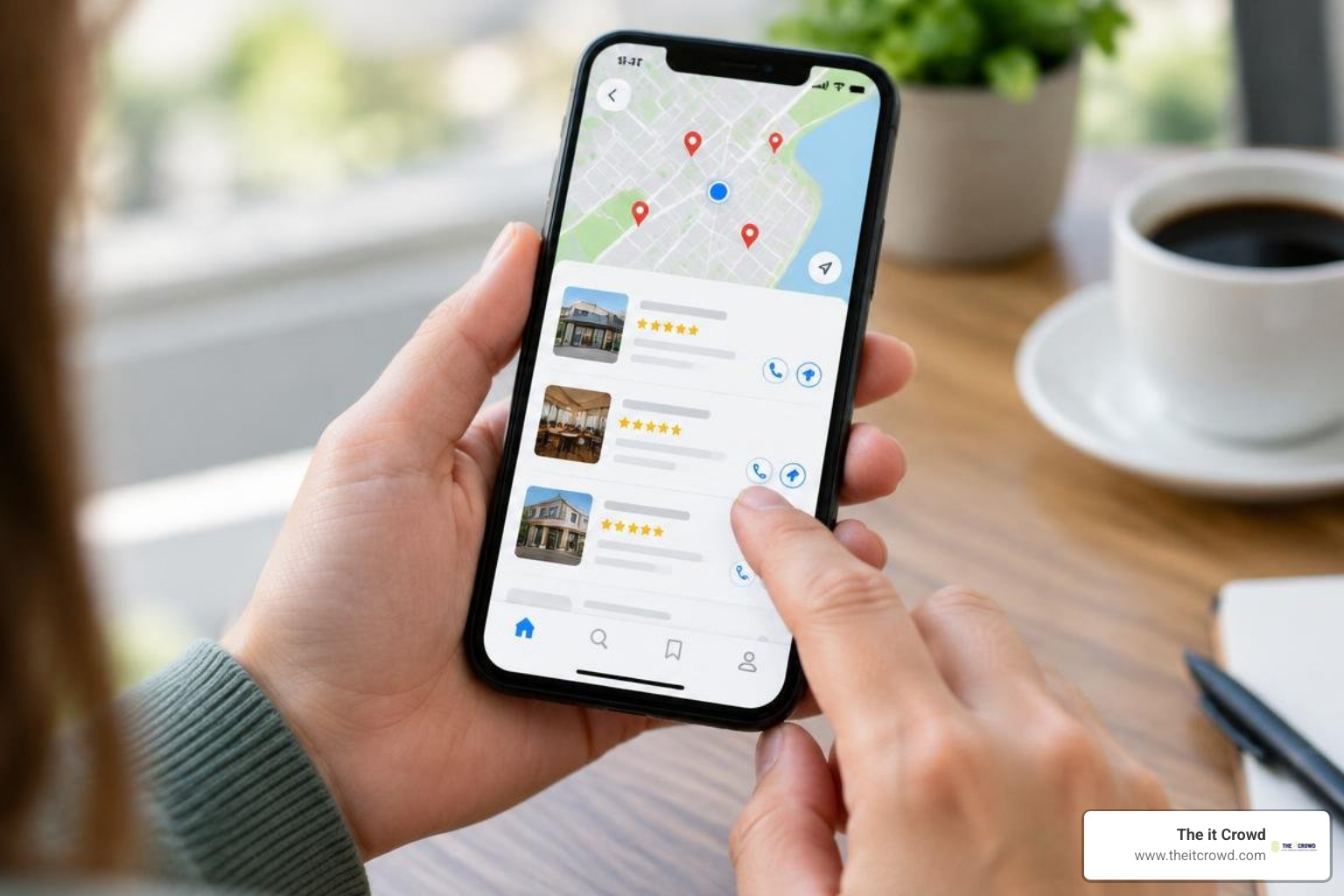
For local businesses, ranking in the Google Local Pack (the top three map listings) drives the vast majority of direct phone calls and map direction requests. However, ranking in the map pack is only half the battle; your listing must compel users to take action. Implementing proven Google Business Profile optimization strategies ensures your profile consistently triggers local engagement signals.
Review Velocity and Photo Freshness Benchmarks
Google’s local algorithm heavily rewards active, well-maintained profiles. Two factors directly determine visibility and conversion rates:
- Review Volume and Velocity: Profiles with 40+ reviews generate 270% more calls than those with fewer than 10 reviews. Yet, approximately 64% of local service contractors in Dallas suffer from inadequate review volume. Consistent, steady review acquisition signals ongoing reliability to search engines.
- Photo Freshness: Visual proof of recent work establishes immediate trust. Profiles that regularly upload high-resolution job site photos receive 35% more views and 24% more website clicks than dormant listings.
Response Speed and Lead Capture Rate
Securing the click or phone call means little if your intake process is slow. Data shows that 78% of customers hire the first contractor or service business that responds. Whether leads arrive via Google messaging, form fills, or direct calls, setting up automated response protocols ensures high-intent prospects do not move on to a competitor.
Website Speed and Technical Content Architecture
A well-optimized Google Business Profile must be supported by a technically sound, fast-loading website. If your landing pages stumble on mobile devices, prospective clients will bounce before reading your value proposition. Our team focuses heavily on technical SEO site optimization to guarantee search engines can seamlessly crawl, index, and rank every asset on your domain.
Technical Performance and Mobile Conversion Speeds
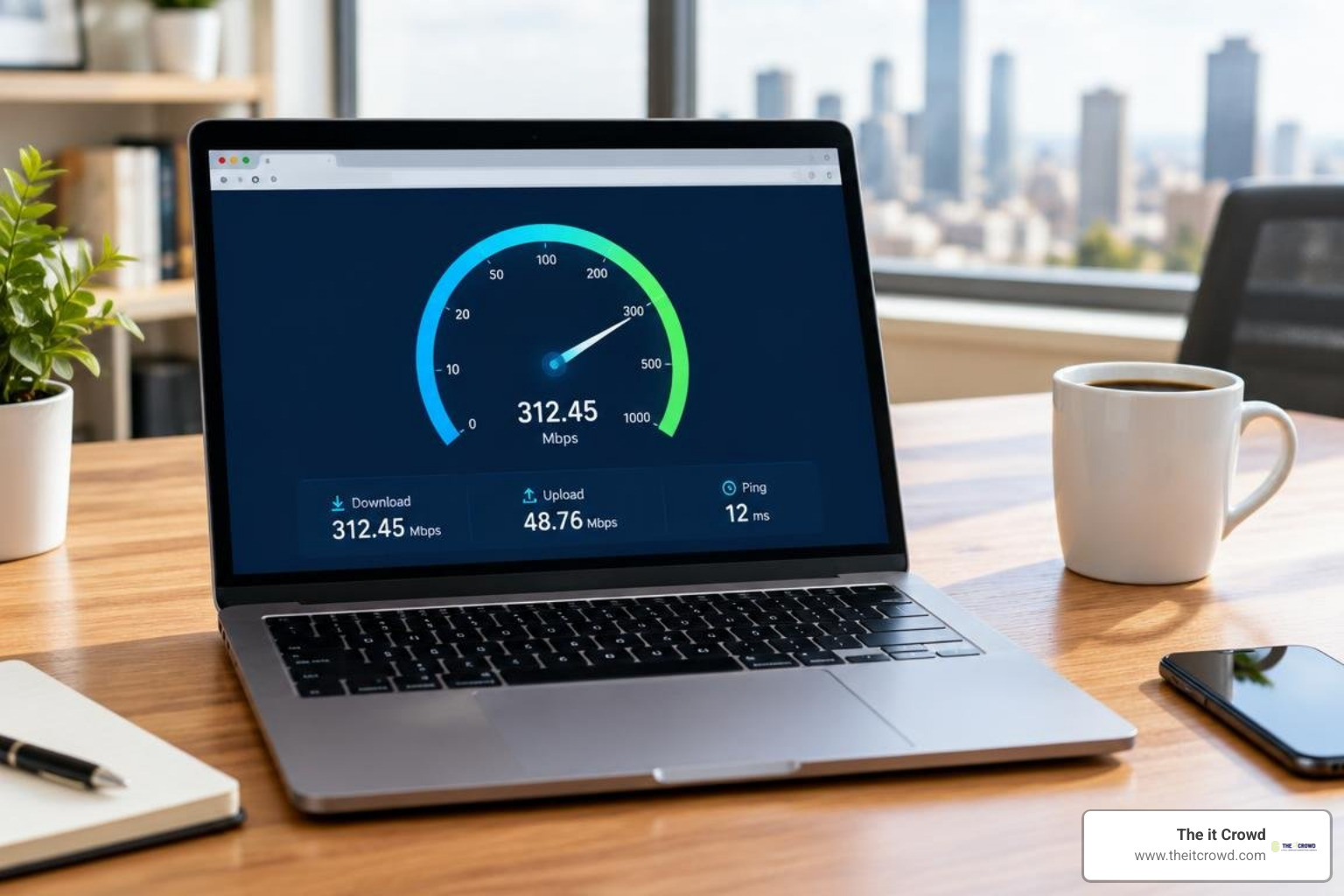
In local search, every millisecond counts toward your bottom line:
- Local service websites loading in under 2.3 seconds convert 67% more visitors than slower alternatives.
- Currently, 58% of Dallas contractors and local businesses operate websites that take longer than 4.1 seconds to load, throwing away qualified traffic.
Optimizing Core Web Vitals, compressing project imagery, and cleaning up server response times prevent costly user drop-off.
Structuring Localized Content Architecture to Scale Dallas SEO Traffic
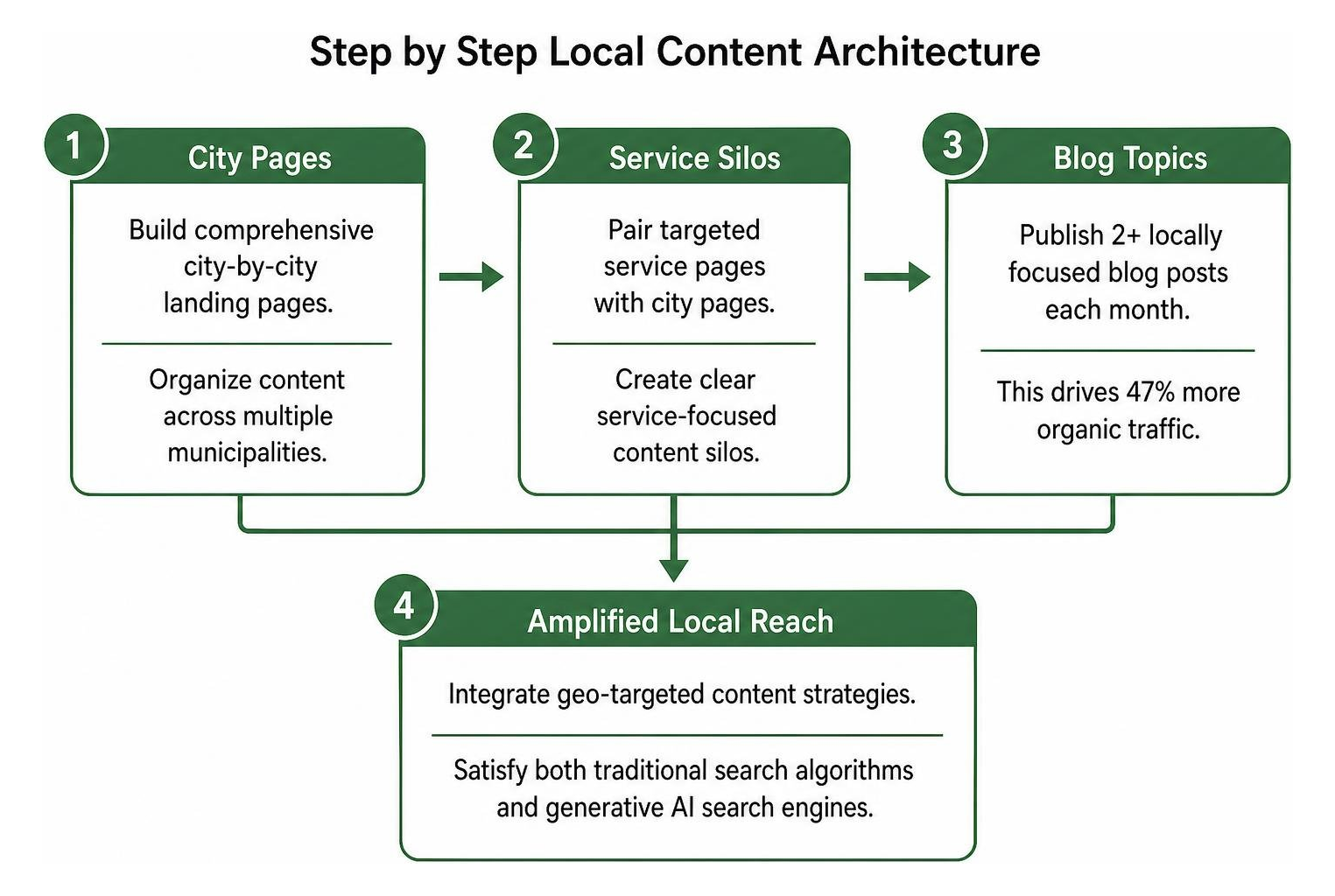
To capture organic demand across multiple municipalities, organize your content into a clean, hierarchical structure. Rather than packing every town into a single footer paragraph, build comprehensive city-by-city landing pages.
Pairing targeted service pages with an active blog amplifies your reach. Local service providers who publish 2 or more locally focused blog posts each month experience 47% more organic traffic than those who publish sporadically. Integrating modern geo-targeted content strategies enables you to satisfy both traditional search algorithms and generative AI search engines simultaneously.
Domain Authority and 18-to-24-Month Compounding Metrics
Organic search growth rarely moves in a straight line. Instead, local search authority operates on a compounding curve where consistent effort suddenly yields dramatic traffic breakouts. Applying tailored industry-specific local SEO campaigns allows smaller firms to outposition regional competitors over time.
Outranking National Competitors with Local Citations
National franchises often possess high overall domain authority, but they lack deep local relevance. Smaller businesses can systematically outrank these corporate giants by securing:
- Hyper-Local Backlinks: Sponsorships of local youth sports leagues, neighborhood associations, and regional charity events.
- Industry-Specific Directory Citations: Clean, consistent Name, Address, and Phone (NAP) data across trade registries and regional chambers of commerce.
- Geographic Context: Embedding geo-tagged service maps and customer testimonials that mention specific Dallas landmarks and subdivisions.
The 18-Month SEO Compounding Curve
Building local authority requires patience before reaching the inflection point. Consider the benchmark trajectory of a regional specialty installation business in the DFW market:
- Months 1–12: Focus placed on technical cleanup, structuring city-by-city landing pages, and acquiring high-quality backlinks. Organic traffic often remains modest during this phase.
- Months 13–18: Domain Authority rises into the 50s. The site accumulates over 4,400 backlinks, expanding its footprint across 275 ranking keywords.
- The Breakout: Organic traffic experiences a step-change jump from near zero to 221+ highly qualified monthly visitors, securing five distinct #1 rankings for high-intent search terms such as “turf company dallas” and “richardson turf company.”
Tracking these shifts requires robust local digital marketing and analytics to monitor keyword footprints, backlink quality, and lead attribution.
Frequently Asked Questions About Local SEO in Dallas
How long does it take for local SEO to compound in competitive Dallas markets?
In competitive Dallas verticals, local SEO typically requires 12 to 18 months of continuous optimization, citation cleanup, and link acquisition before hitting a compounding breakout. While initial ranking improvements for low-competition long-tail queries often appear within 3 to 6 months, dominating primary commercial terms requires establishing strong domain authority and deep geographic topical relevance.
Why do neighborhood-specific landing pages convert higher than generic Dallas pages?
Neighborhood-specific landing pages convert at substantially higher rates (often 3.7 times higher) because they address the exact geographic context of the buyer. A searcher in Preston Hollow or Highland Park wants to know that a service provider frequently works in their specific neighborhood, understands local property standards, and can provide rapid on-site service.
What Google Business Profile metrics have the biggest impact on rankings?
The most influential Google Business Profile ranking factors include primary business category selection, geographic proximity to the searcher, sustained review velocity (aiming for 40+ high-rating reviews), regular photo additions, and high user interaction rates (such as direct phone calls and driving direction requests).
Conclusion
Scaling organic traffic in the Dallas–Fort Worth market requires moving past vanity metrics and focusing on hyper-local execution. By capturing high-intent neighborhood searches, preparing for seasonal demand spikes, optimizing your Google Business Profile, and building fast-loading localized site architecture, you position your company for sustainable, compounding growth.
At The it Crowd, we serve as your full-service digital growth partner, combining web development, technical SEO, and proprietary AI automation (“The Hive”) to help you dominate local SERPs and turn search visibility into dependable revenue.

