

A Practical Guide to Brand Etiquette Basics
Brand Etiquette: The Basics of Earning Trust
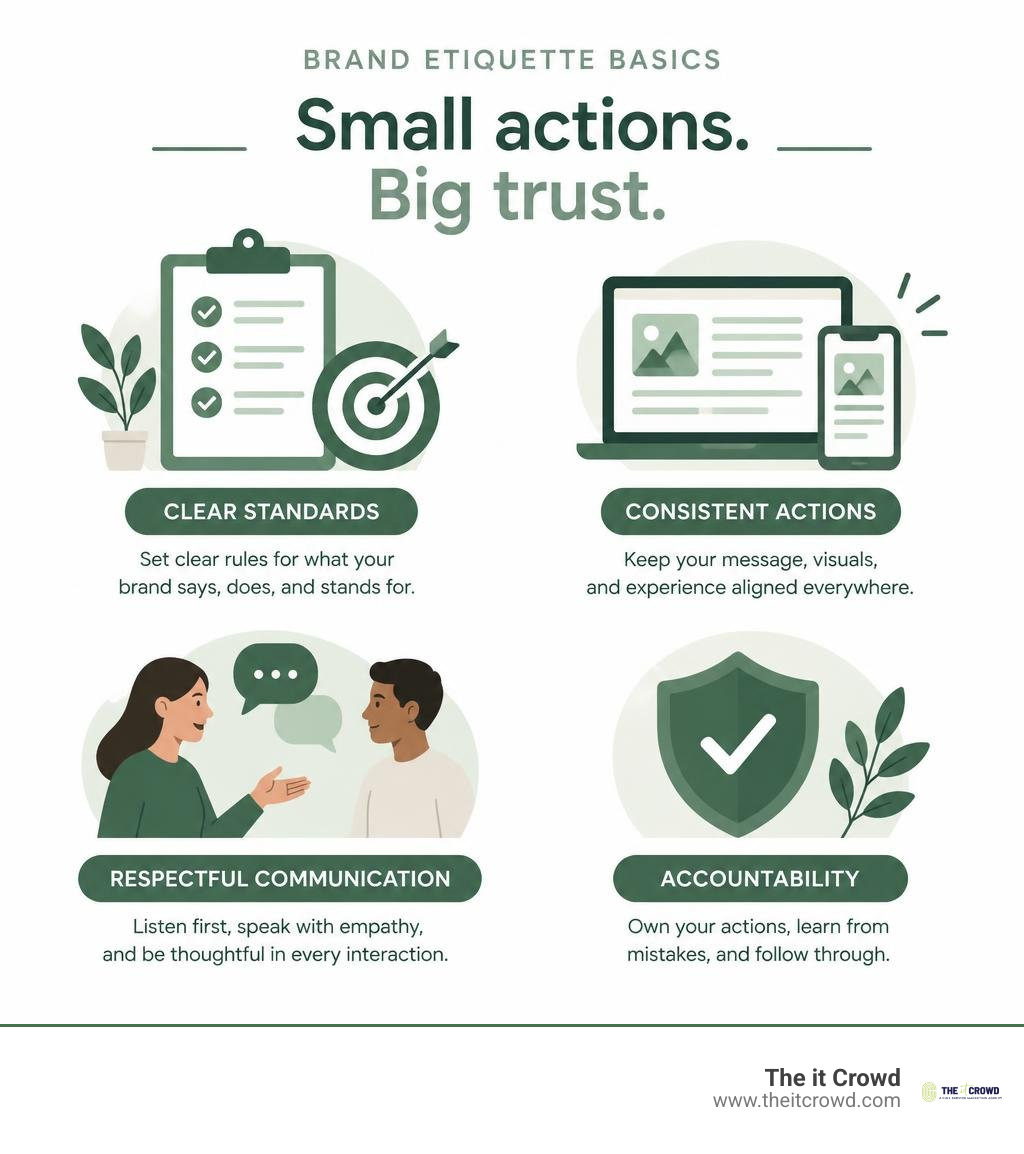
Brand etiquette is how a business shows respect in every interaction. It means keeping promises, using a consistent voice and visual identity, protecting customer information, and listening before responding. Start by setting clear rules for what your brand says, how it handles mistakes, and how it treats people across ads, social media, support, and in-person experiences.
Good etiquette helps customers know what to expect. When your actions match your message, trust has room to grow.
I’m Lindsey Huettner, owner of The it Crowd. After more than 19 years in marketing and business ownership, I’ve learned that brand etiquette works best when branding, content, and customer communication follow the same standards.
What Is Brand Etiquette and Why Does It Matter for Consumer Trust?
Every business projects a personality, but etiquette governs its behavior. Brand etiquette defines the behavioral standards, unwritten rules, and ethical boundaries that dictate how an organization interacts with customers, partners, competitors, and the public. It transforms abstract corporate values into observable daily habits.
While marketing attracts attention, etiquette determines whether people feel respected enough to stay. When a company honors its commitments, respects privacy, and communicates with genuine empathy, it builds reputational equity. Exploring the psychology of brand memory shows that consumers remember emotional feelings and behavioral consistency long after they forget a clever tagline. Poor manners—such as spamming inboxes, ignoring complaints, or displaying arrogance—alienate audiences permanently.
(Above: The behavioral progression from establishing standards to winning sustained customer loyalty.)
The Core Pillars of Modern Brand Etiquette
Sound brand behavior rests on four fundamental pillars:
- Behavioral Consistency: Your tone, promises, and operational standards must align whether a customer visits your website, reads a promotional brochure, or contacts technical support.
- Active Listening: Modern communication is a two-way dialogue. Respectful brands monitor customer sentiment, acknowledge feedback, and adapt rather than broadcasting messages into a void.
- Authentic Empathy: Addressing customer friction requires real human understanding rather than robotic, scripted brush-offs. Implementing a values-first client loyalty strategy ensures your team treats clients as long-term partners instead of transaction records.
- Corporate Transparency: Honesty regarding pricing, capabilities, delays, and product origins establishes credibility before a sales conversation even begins.
Applying the BRAVING Framework to Customer Trust
To operationalize brand etiquette, organizations can adapt Dr. Brené Brown’s BRAVING inventory, a trust framework widely used in marketing analysis. This framework breaks trust down into seven actionable behavioral elements:
- Boundaries: Clearly define what your brand stands for and what topics or behaviors fall outside your scope. Crossing established boundaries abruptly can alienate loyal communities.
- Reliability: Deliver what you promise, on time, every time. Avoid setting customer expectations your operations cannot sustain.
- Accountability: Own operational missteps promptly without offering defensive excuses or blaming third parties.
- Vault: Safeguard confidential customer data, internal correspondence, and sensitive information with enterprise-grade security.
- Integrity: Choose what is right over what is fast, easy, or temporarily profitable.
- Non-Judgment: Create an environment where customers feel comfortable asking questions or seeking technical help without fear of condescension.
- Generosity: Extend the most charitable interpretation to customer frustrations, offering helpful resources and support freely.
| BRAVING Element | Brand Behavior Standard | Common Etiquette Failure |
|---|---|---|
| Boundaries | Staying aligned with brand archetype and expertise | Chasing irrelevant viral trends outside brand values |
| Reliability | Maintaining high product uptime and service standards | Over-promising delivery timelines to secure sales |
| Accountability | Issuing immediate, sincere public corrections | Shifting blame to junior staff, vendors, or algorithms |
| Vault | Protecting consumer data and private conversations | Selling user information or leaking direct messages |
| Integrity | Living stated values in supply chain and hiring | Engaging in greenwashing or performative activism |
| Non-Judgment | Supporting confused or novice users with patience | Mocking user questions or dismissing bug reports |
| Generosity | Providing educational content and easy dispute resolution | Nickeling-and-diming users on return policies |
Visual Identity and Logo Etiquette Across Physical and Digital Assets
Brand etiquette extends beyond spoken or written words into physical touchpoints and visual presentations. How you treat your visual identity signals how much pride and care you invest in your business. Slapping a distorted logo onto cheap merchandise tells potential partners that your organization cuts corners.

A disciplined visual presentation protects brand equity. Investing in comprehensive corporate identity design gives your team clear visual guidelines that prevent off-brand collateral from diluting customer perception.
Standardizing Logo Usage and Application Techniques
Your logo is the visual signature of your organization. Treating it with etiquette means establishing and enforcing clear design rules:
- Clear Space and Proportions: Never stretch, skew, rotate, or cram your logo into tight spaces. Maintain generous breathing room around visual marks so they retain impact.
- Contextual Sizing: An oversized, screaming logo on a small promotional product feels aggressive. A tiny, illegible logo on a massive display gets lost. Scale your mark relative to the canvas.
- Material-Specific Application: Select application techniques that match the medium. Use fine embroidery on fabric apparel, crisp laser engraving on executive metal pens, and precision pad printing on glassware or plastics.
- Simplification for Small Scales: When printing on compact items like lapel pins or smartcard tags, use simplified brand marks or clean monograms rather than detailed primary logos.
Establishing these design rules begins in structured brand discovery and strategy frameworks where visual assets and usage boundaries are formalized.
The Nuances of Promotional Product Etiquette
Promotional gifts are an extension of your hospitality. Giving low-quality items that end up in landfills damages your brand perception.
- Prioritize Recipient Utility: Select items people genuinely want to keep, such as durable drinkware, quality notebooks, or premium umbrellas.
- Embrace Subtle Branding: A discreet, tonal imprint or debossed emblem often feels more elegant and luxurious than high-contrast, edge-to-edge printing.
- Respect Executive Context: High-value clients appreciate understated craftsmanship over loud marketing swag. Let the build quality of the gift carry the positive association.
Navigating Social Media Etiquette and Digital Communications
Social media platforms are shared public spaces, not purely one-way broadcast networks. Brands that treat online feeds like commercial billboards quickly face audience fatigue or viral pushback.
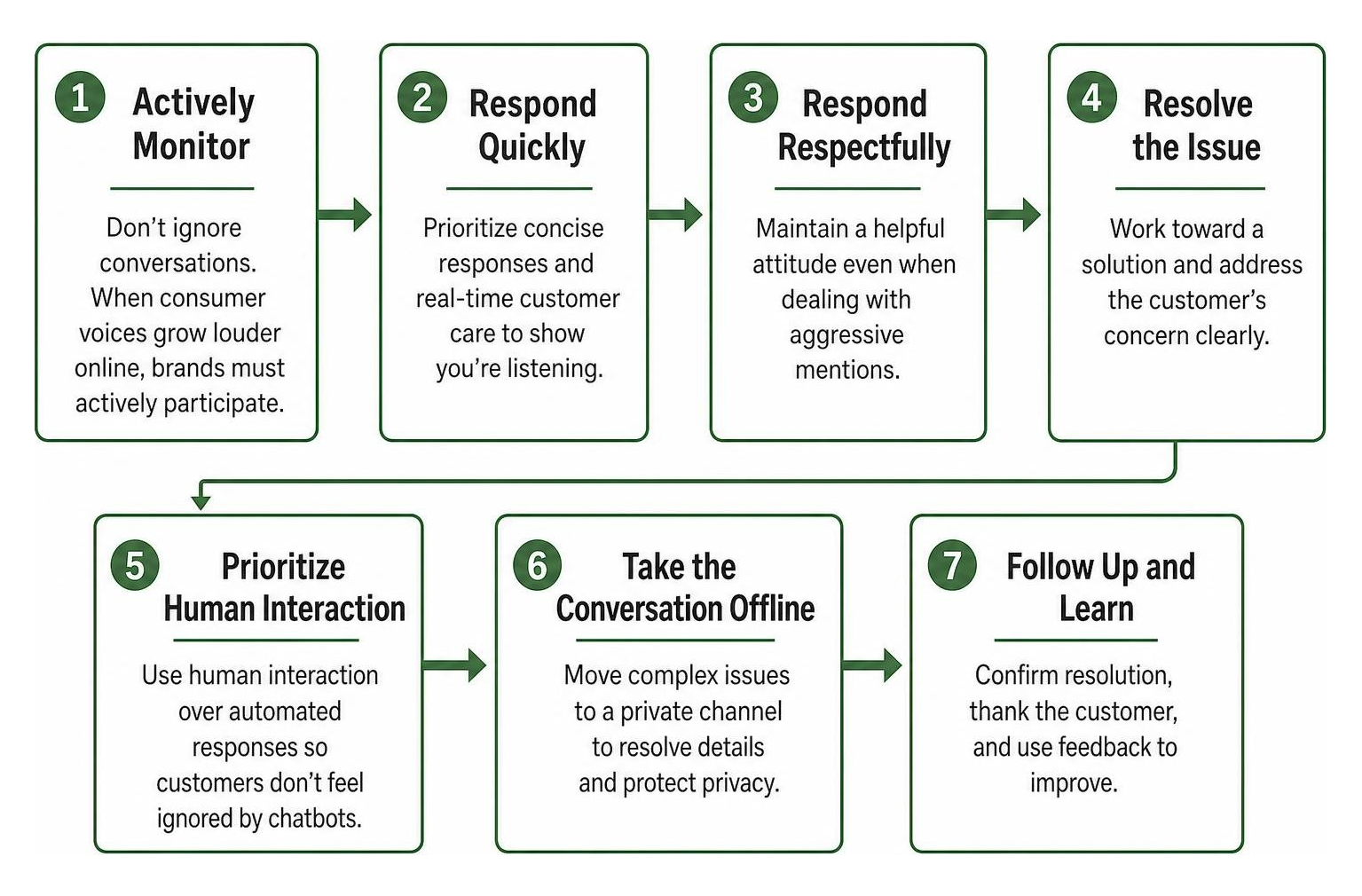
Research on digital relationship dynamics in Social media etiquette: A guide and checklist to the benefits and perils of social marketing emphasizes that when consumer voices grow louder online, brands must actively participate rather than ignore conversations. Because social networks amplify both positive praise and sharp critiques, thoughtful community management is a vital component of long-term reputation care.

Cultivating meaningful customer relationships online requires building brand loyalty through social media by delivering valuable insights, entertaining your audience, and managing comments respectfully.
Channel-Specific Rules for Community Engagement
Different platforms maintain distinct social norms. A casual, self-deprecating tone that works on TikTok will appear unprofessional on an enterprise LinkedIn thread:
- LinkedIn: Focus on industry insights, professional achievements, and meaningful discussions. Avoid clickbait headlines, vague engagement bait, or overly personal oversharing.
- X (formerly Twitter) & Threads: Prioritize concise responses, real-time customer care, and quick problem resolution. Maintain a helpful attitude even when dealing with aggressive mentions.
- Instagram & TikTok: Blend high-quality visual storytelling with entertaining, behind-the-scenes content. Engage genuinely in comments rather than pasting generic emojis.
- Customer Support Channels: When handling user friction online, prioritizing human interaction over automated responses prevents frustrated users from feeling ignored by scripted chatbots.
Integrating Influencer Partnerships and Digital Brand Etiquette
Influencer collaborations demand clear guidelines to protect brand trust:
- Values Alignment: Vet potential creators thoroughly to ensure their past content and public values align with your organization’s standards.
- Regulatory Transparency: Require clear, prominent disclosures (such as
#ador#sponsored) on all promotional content to respect consumer intelligence and satisfy consumer protection laws. - Authentic Creative Freedom: Provide guardrails regarding brand facts, but avoid handing influencers rigid scripts. Audiences respond best when creators use their authentic voice.
- Embrace Everyday Advocates: Modern consumers often prefer relatable personalities over celebrity endorsements. Consider partnering with real people over traditional actors to build genuine trust with niche communities.
Cultural Sensitivity, Industry Contexts, and Real-World Traditions
Brand etiquette requires understanding the cultural backgrounds, traditions, and specific environments of your audience. A campaign that feels lighthearted in one market may cause offense in another.
Understanding the deep impact of authentic audience representation ensures your messaging reflects real human experiences instead of superficial stereotypes.
Responsible Marketing in Regulated Industries and Travel
Regulated sectors carry heightened etiquette requirements where customer safety and legal compliance intersect:
- Alcohol and Regulated Products: Industry standards such as the GLOBAL MARKETING & COMMUNICATIONS CODE mandate strict age-affirmation mechanisms (requiring that marketing channels reach audiences that are at least 70% above the legal drinking age), clear moderation messaging, and responsible depictions that never link consumption with dangerous activities.
- Public Transit and Travel: Airlines operate in shared spaces where etiquette friction runs high. Creative campaigns have turned plane etiquette debates into fashion collections, showing how brands can use lighthearted humor to encourage courteous behavior—such as respecting seat space, sharing armrests, and waiting your turn to deplane.
Honoring Community Traditions and Local Rituals
Tapping into regional traditions requires humility and cultural authenticity rather than transactional opportunism.
In South Africa, Pick n Pay connected with local shoppers by launching humor-driven video shorts exploring braai etiquette. By celebrating familiar rituals—like who controls the fire, how dishes are shared, and the dynamic between guests—the retailer honored cultural identity with warm humor.
Similarly, time-honored agricultural traditions, such as community ranch brandings, rely on unwritten social codes: waiting for instructions from the herd owner, helping neighboring ropers, and sharing a communal meal. Effective regional campaigns succeed by moving past one-size-fits-all marketing and respecting the heritage of local communities.
Crisis Management: Recovering from Etiquette Failures and Rebuilding Reputation
Even well-managed companies make mistakes. What separates durable brands from damaged ones is how they respond when things go wrong. Failing to understand critical marketing mistakes to avoid can quickly turn a minor oversight into an expensive crisis.
Accountability vs. Defensiveness in High-Stakes PR Crises
When an etiquette or operational breakdown occurs, defensive corporate communications often worsen the damage:
- The Cost of Tech Outages: A major cybersecurity provider saw its stock plummet more than 40% from its 2024 highs within days of a software update that caused global computer outages, highlighting that operational reliability and rapid, transparent customer support are critical to enterprise value.
- Misreading Core Audiences: A leading light beer brand slipped from its position as the top-selling light beer to third place in its category after a misaligned promotional campaign alienated its core demographic and was followed by fragmented corporate statements.
- Delayed Crisis Communication: A global automaker faced a wave of negative public sentiment that precipitated a run on its shares, wiping US $34 billion from the company’s valuation during a safety and social media crisis amplified by delayed initial responses.
When handling operational failures, relying on empathetic, human-centered brand communication helps de-escalate tension and rebuild trust far more effectively than generic legal statements.
A Strategic Roadmap for Reputation Restoration
When your brand makes an etiquette misstep, follow this five-step recovery framework:
- Acknowledge Quickly: Address the situation publicly within hours, not days. Acknowledge that an issue occurred without deflecting blame.
- Offer a Sincere Apology: A real apology focuses on the impact on affected customers. Avoid defensive non-apologies like “We regret if anyone was offended.”
- Take Immediate Corrective Action: Explain the concrete steps you are taking right now to fix the mistake, compensate affected users, or correct inaccurate information.
- Conduct an Internal Root Cause Audit: Review the internal approvals, assumptions, or gaps that allowed the misstep to happen, and update your policies accordingly.
- Demonstrate Long-Term Reform: Rebuild goodwill through sustained, positive actions over time rather than short-term PR spin.
Frequently Asked Questions About Brand Communication
What is the primary difference between brand etiquette and brand voice?
Brand voice defines your organization’s personality, vocabulary, and tone of expression. Brand etiquette encompasses the underlying behavioral rules, ethical standards, and manners governing how your brand treats people across every interaction. Voice is how you speak; etiquette is how you behave.
How can an organization audit its brand etiquette?
Start by mapping every customer touchpoint across sales, onboarding, billing, customer support, and social media. Review direct messages, public comments, customer service tickets, and promotional merchandise against your brand values. Interview front-line staff and look for recurring areas of customer friction or inconsistent messaging.
What is the fastest way to recover from an online etiquette mistake?
Own the mistake immediately, apologize sincerely without making excuses, delete or correct inaccurate content transparently, and explain the steps you are taking to prevent the issue from recurring. Sincere accountability defuses online outrage quickly.
Conclusion
Brand etiquette is not an optional polish applied to marketing campaigns; it is the behavioral foundation of sustainable business growth. From how your logo is placed on a gift to how your team manages a public customer complaint, every operational detail signals your values to the market.
By applying clear boundaries, listening actively, respecting diverse cultural traditions, and practicing transparent accountability, your business can turn casual buyers into lifelong advocates. To build a cohesive, trust-centered identity for your business, explore mastering effective branding strategies and guidelines with our team at The it Crowd.

