

How to Audit Your Brand Etiquette
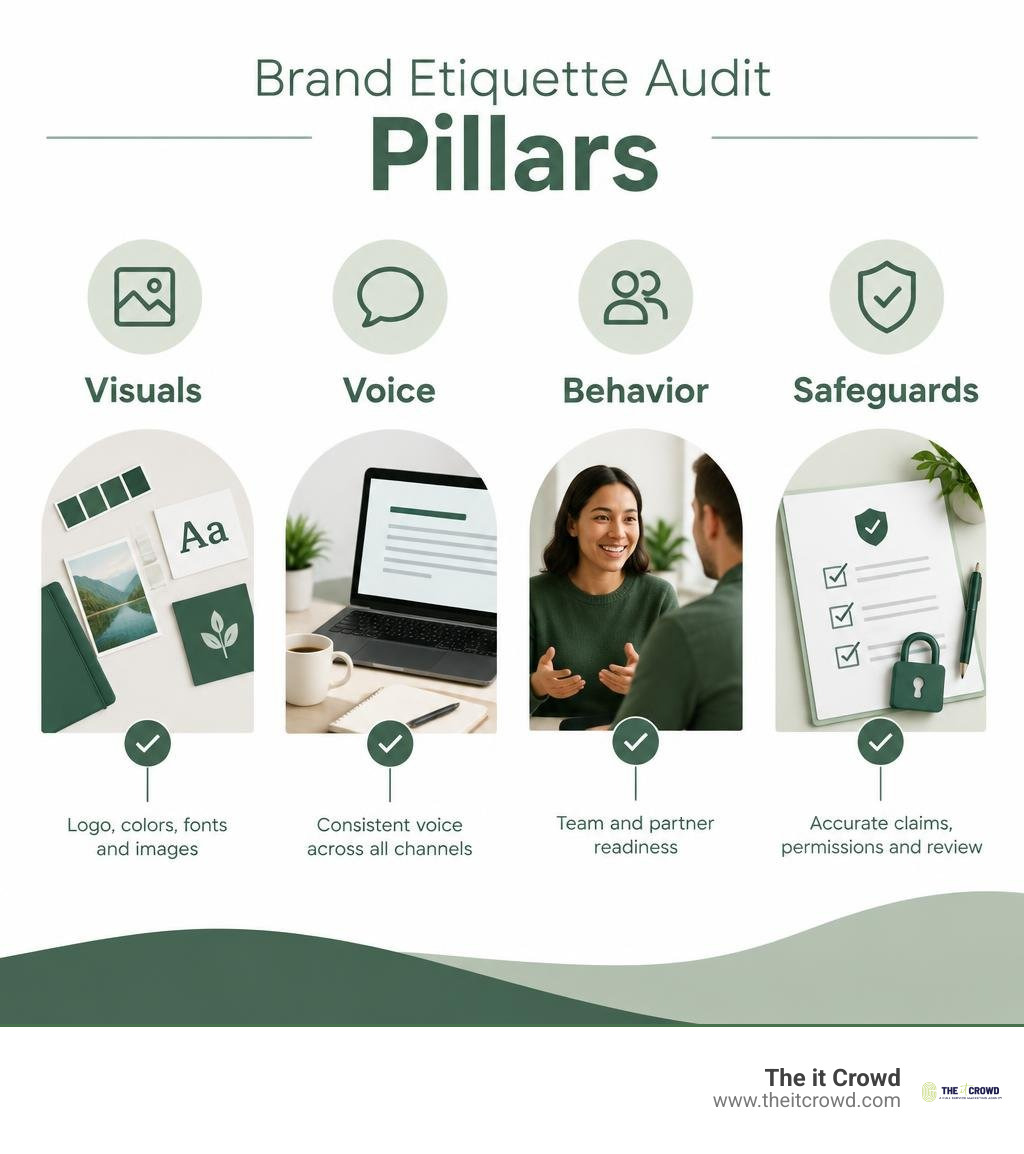
A brand etiquette checklist helps you check whether your business looks, sounds, and acts like the same brand everywhere customers meet it. Start with these four checks:
- Visuals: Are the logo, colors, fonts, and images approved and used correctly?
- Words: Do your website, ads, emails, and social posts use a consistent voice?
- Behavior: Do employees and partners know how to respond to customers and represent the brand?
- Safeguards: Are claims accurate, permissions in place, and sensitive issues sent to the right person for review?
Use the checklist before publishing, then revisit it as your channels and business change.
I’m Lindsey Huettner, owner of The it Crowd. My 19 years in marketing and business ownership have shown me why a practical brand etiquette checklist matters when teams work across many channels.
Core Components of an Actionable Brand Etiquette Checklist
Maintaining high-level brand consistency requires moving beyond surface aesthetics. While traditional style manuals define static design rules, a functional etiquette protocol governs real-time corporate behavior across every touchpoint. It bridges the gap between what your company says and how your team acts.
| Focus Area | Traditional Visual Style Guide | Brand Etiquette Checklist |
|---|---|---|
| Primary Purpose | Defines visual design rules, logo placement, and typography. | Governs real-time behavior, tone, legal safety, and stakeholder communication. |
| Core Audience | Graphic designers, creative agencies, and developers. | All internal teams, executive leadership, external partners, and customer service. |
| Channel Scope | Static print assets, websites, and promotional collateral. | Email signatures, social media DMs, phone scripts, crisis response, and public statements. |
| Key Output | A fixed design asset library (HEX codes, EPS files, master decks). | Dynamic interaction workflows, compliance criteria, and communication safeguards. |
Visual Identity Standards and Asset Integrity
A brand’s visual identity serves as its immediate handshake with the marketplace. When visual assets appear distorted, improperly spaced, or off-color, customer trust drops instantly.
Every audit begins by verifying baseline parameters across all platforms:
- Logo Clear Space and Placement: Maintain a minimum staging buffer around your logo free of competing text or graphics. Lock down horizontal versus vertical orientations to prevent distorted aspect ratios.
- Exact Color Formats: Never guess a shade. Document every brand color across digital HEX and RGB codes, as well as print-ready CMYK and Pantone matching systems.
- Typographic Hierarchy: Define explicit header font pairings, body styles, and fallback web-safe typefaces to maintain readability across devices.
- Approved Imagery & Trade Dress: Curate visual libraries that showcase authentic representation. Protect your trade dress by ensuring custom graphic elements, packaging layouts, and proprietary iconography remain uniform across all campaigns.
For growing businesses that want a cohesive look across all customer touchpoints, investing in comprehensive branding and corporate identity systems ensures every visual asset is standardized from day one.
Tone of Voice and Messaging Alignment
Visuals capture initial attention, but written and spoken language dictates lasting relationships. Your brand persona should feel consistent whether a customer reads a technical whitepaper or scrolls past an informal social post.
Establish a clear vocabulary framework that outlines preferred industry phrasing alongside explicit words to avoid. Emphasize empathy, clarity, and helpfulness over convoluted corporate jargon. Even as artificial intelligence tools become standard in content creation pipelines, preserving human-centric emotional branding ensures your communications connect on a genuine emotional level. Structuring this consistency across departments requires a structured messaging architecture that aligns internal values with public-facing customer communication.
Essential Rules in a Brand Etiquette Checklist

To prevent confusion across decentralized teams, every organization needs non-negotiable operational boundaries. These core rules protect brand equity and avoid legal missteps:
- Protect Trademark and Copyright Marks: Consistently apply proper registration designations (®, ™, ©) across all commercial assets, product packaging, and primary web domains.
- Standardize Co-Branding Protocols: Establish visual hierarchy rules for joint venture collateral. Determine exactly when the parent brand takes precedence over partner badges, and ensure clear separation between logos.
- Clarify Sub-Brand Hierarchy: Define clear visual and naming relationships between secondary product tiers and the master brand to avoid market confusion.
- Enforce Partner Licensing Standards: Require external distributors, affiliates, and event sponsors to use approved digital kits rather than pulling low-resolution graphics from web searches.
Grounding these operational rules within strategic brand positioning principles keeps your market presence focused, memorable, and distinct from industry alternatives.
Multi-Channel Implementation Across Digital and Physical Touchpoints
Omnichannel consistency is more than just posting the same graphic across three social platforms; it means delivering a coherent customer experience whether someone visits your retail storefront, calls your help desk, or opens a promotional newsletter. Seamless touchpoints reinforce reliability, and mastering retention through effective customer communication turns first-time buyers into loyal brand advocates.
Email, Voice, and Internal Messaging Etiquette
Direct interactions between team members and customers demand clear behavioral guardrails. Outdated email footers, missing contact info, or unprofessional phone habits erode credibility quickly.
To maintain professional standards across daily direct channels, enforce the following checklist items:
- Email Signatures: Use a locked HTML template that specifies font family, point size, company physical address, and approved direct contact channels. Keep promotional badges brief and relevant.
- Mandatory Confidentiality Footers: Include standard privacy disclaimers on all outbound external emails to protect sensitive operational and client data.
- Corporate Voicemail Scripts: Require staff to maintain personalized, clear greetings that state their name, business unit, and an estimated callback window.
- Out-of-Office Protocols: Out-of-office automations must provide secondary colleague contact information rather than vague personal travel details.
Organizations looking to establish structured internal communication standards can review the Ritz-Carlton enterprise communications style guide as a leading benchmark for executive voice and correspondence.
Social Media Conduct and Community Engagement

Social platforms operate in real time, making clear conduct policies essential. When internal team members post about company initiatives or field public comments, their actions reflect directly on the brand.
Teams should adopt strict behavioral policies modeled after Starbucks’ published global social media standard guidelines, which distinguish personal employee commentary from official brand communications:
- Personal Account Disclaimers: When employees discuss company-related topics on personal profiles, require explicit disclosures stating that opinions are their own and do not represent executive leadership.
- Community Moderation Frameworks: Establish structured reply pathways for customer inquiries. Address legitimate grievances publicly with empathy, then transition sensitive account details to secure private channels.
- Influencer Verification Standards: Ensure external campaign creators align with community standards. For regulated industries like food, beverage, or adult products, verify that creator audiences meet age-affirmation minimums (such as 70% adult demographic thresholds).
- User-Generated Content Approvals: Always obtain documented written permission before repurposing customer photos, reviews, or video content in commercial campaigns.
Global Market Adaptations and Cultural Sensitivity
Expanding into diverse regional markets requires adapting your messaging to local customs without losing core brand identity. Cultural symbols, idioms, and color associations vary widely across borders.
- Cultural Color Symbolism: Colors carry different meanings globally. While white signifies purity in Western markets, it represents mourning in parts of East Asia. Audit palettes against regional cultural norms before launching international initiatives.
- Inclusive and Accessible Language: Ensure all digital collateral adheres to WCAG accessibility standards, including readable contrast ratios, alt text for imagery, and clear closed captioning for video content.
- Localized Idiom Reviews: Avoid regional slang or idioms that fail to translate cleanly across languages.
Building authentic, inclusive customer relationships founded on mutual respect is the core driver behind values-driven client loyalty.
Brand Governance, Compliance, and Crisis Protocols
Even the most thorough communication standards fall apart without clear internal governance. A strong oversight framework ensures rules are actively followed rather than gathering dust in an unread onboarding manual.
Step-by-Step Brand Etiquette Checklist for Compliance Audits
Conducting structured quarterly reviews keeps your marketing collateral aligned with changing legal requirements and brand standards.
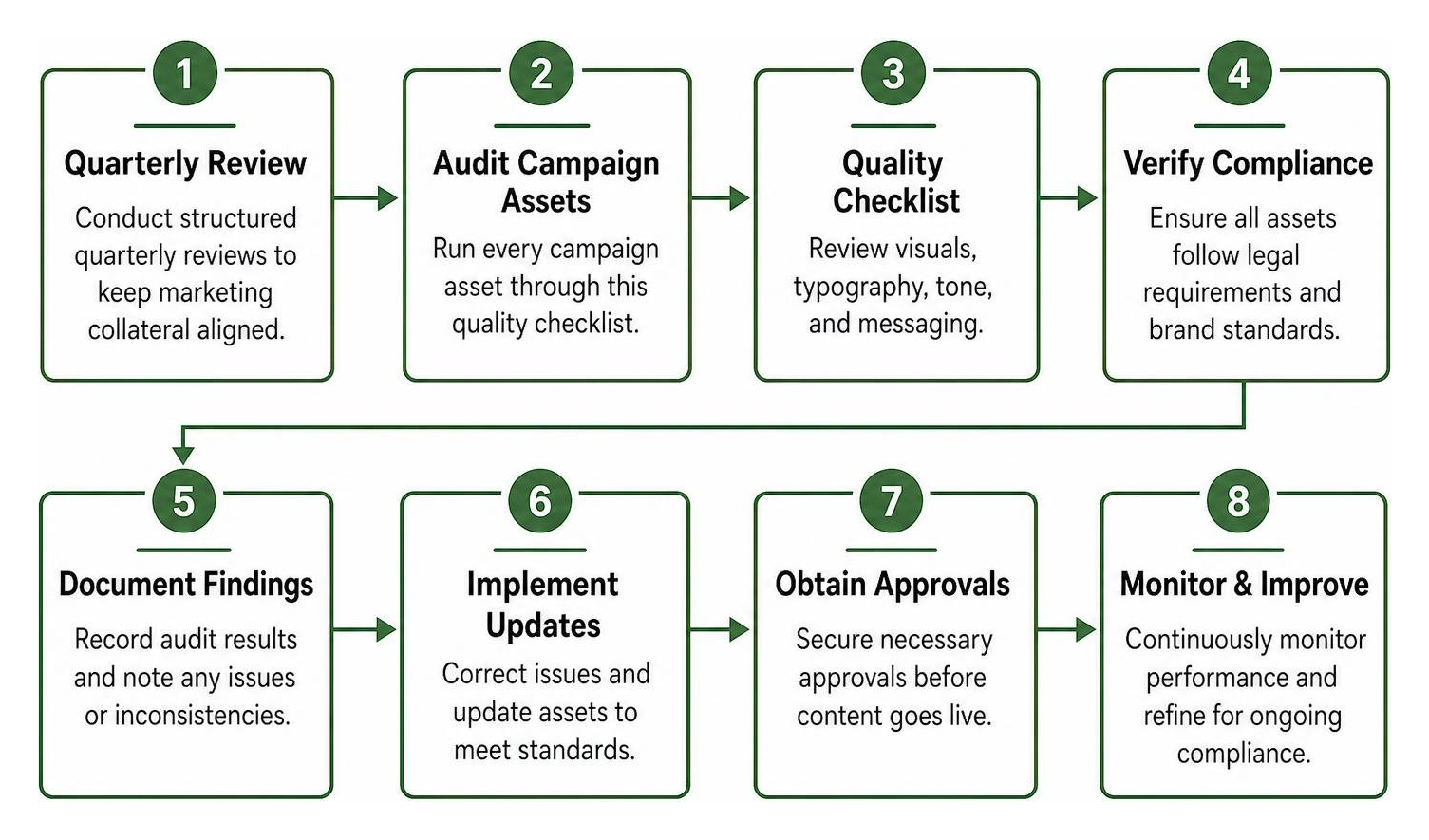
When conducting an internal communications audit, run every campaign asset through this quality checklist:
- [ ] Visual Identity Check: Are all logos using approved orientations with proper clear space and accurate color codes?
- [ ] Typography & Layout: Are headlines and body paragraphs formatted using approved brand typefaces and contrast levels?
- [ ] Tone & Messaging Verification: Does the copy follow persona guidelines, avoid banned buzzwords, and speak directly to target audience needs?
- [ ] Legal Disclaimers & Copyright: Are correct copyright years, trademark symbols, and mandatory industry disclaimers visible?
- [ ] Regulatory Advertising Standards: Are promotional claims, sustainability statements, or technical performance guarantees backed by documented evidence?
- [ ] Functional Digital Links: Have all CTA buttons, tracking parameters, and unsubscribe mechanisms been tested and verified?
For teams building internal review protocols, Curtin University’s structured communications quality checklist provides a practical framework for sign-off workflows across multi-department organizations.
Digital Asset Management and AI-Enabled Workflows
Modern organizations manage thousands of marketing files across distributed teams. Relying on disorganized shared drives leads to outdated logos and off-brand templates slipping into production.
Implementing a centralized Digital Asset Management (DAM) system creates a single source of truth for your organization. Modern DAM platforms allow you to atomize brand guidelines into searchable, rule-based asset libraries. Designers and marketers can quickly locate approved photography, current vector logos, and licensed font packages. Furthermore, by embedding your brand etiquette rules directly into the guardrails of internal AI agents, your team can automate compliance reviews for ad copy, blog drafts, and customer service responses before anything goes live.
Crisis Communication and Reputation Defense
When public controversies, service outages, or operational mishaps occur, unprepared teams often react defensively, worsening the issue. A rapid-response etiquette protocol preserves trust during critical moments.
- Designate a Single Media Spokesperson: Route all press, influencer, and public inquiries through one trained representative. Prohibit unauthorized staff from issuing unofficial commentary.
- Deploy Pre-Approved Holding Statements: Acknowledge issues immediately using empathetic, transparent language while technical teams investigate root causes.
- Equip Front-Line Support: Provide customer service and social media teams with de-escalation scripts to handle inbound complaints calmly and consistently.
- Publish Post-Incident Reviews: Once an issue is resolved, share clear remediation steps to rebuild stakeholder trust and reinforce accountability.
Frequently Asked Questions About Brand Etiquette
What is the purpose of a brand etiquette checklist?
A brand etiquette checklist serves as an operational blueprint for how an organization presents itself and interacts with the public. It ensures every touchpoint—from sales calls to social media replies—aligns with corporate values, maintains visual and verbal consistency, protects legal trademarks, and builds long-term customer trust.
How often should a company update its brand etiquette standards?
Organizations should conduct a comprehensive review of their brand etiquette standards annually. However, functional audits should occur quarterly to evaluate emerging social platforms, new media formats, and evolving compliance regulations. Whenever a company undergoes a major rebrand or product expansion, these guidelines should be updated immediately.
How do brand etiquette guidelines differ from traditional style guides?
Traditional style guides focus primarily on visual rules, such as logo sizes, color palettes, and font pairings. Brand etiquette guidelines go much further by defining interactive behavior, tone of voice, customer support standards, employee social media policies, legal disclaimers, and crisis communication protocols.
Conclusion
A successful brand identity is built on how your company behaves across thousands of daily customer touchpoints. By establishing clear visual rules, refining your tone of voice, and enforcing a structured brand etiquette checklist, you protect your market reputation and foster long-term customer loyalty.
At The it Crowd, we help ambitious businesses turn scattered marketing efforts into unified, high-performing growth engines. Whether you need full-scale corporate identity development, AI-enabled workflow infrastructure, or integrated multi-channel campaign execution, our Dallas-based team provides the end-to-end expertise required to scale your business. Discover our complete framework for effective branding dos and donts strategies to keep your business messaging consistent, impactful, and built for sustainable growth.

