
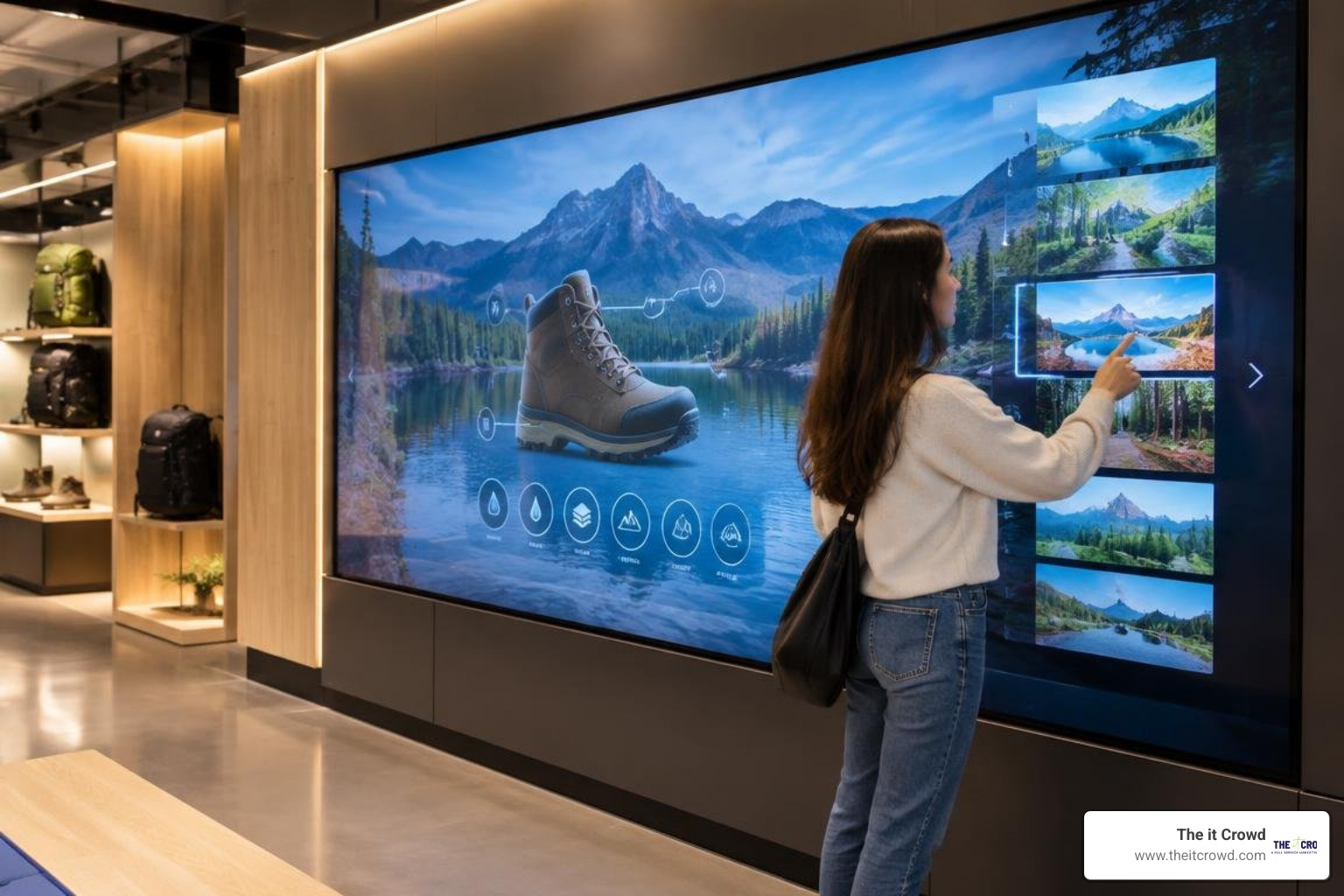
What Is a Brand Experience Design Agency and What Does It Do?
A brand experience design agency is a specialized creative consultancy that shapes how people perceive, feel, and interact with an organization across every physical, digital, and sensory touchpoint. Rather than confining branding to two-dimensional assets like logos or social media ads, these agencies treat the brand as an interactive ecosystem. They orchestrate customer journeys that unfold in three dimensions, transforming abstract corporate values into physical spaces, interactive technologies, and emotional memories.
At its core, brand experience design merges spatial architecture, environmental psychology, interactive media, and narrative storytelling. When someone walks into a retail flagship, an innovation center, or an executive briefing hub, every detail communicates a message. The ambient lighting, the acoustic landscape, the tactile qualities of interior materials, and the responsiveness of digital installations are deliberately engineered to guide the visitor through an intentional narrative arc. By unifying these disparate disciplines, a brand experience design agency turns passive observers into active participants who form deep, lasting bonds with the organization.
The Core Services Offered by a Brand Experience Design Agency
Modern experience agencies offer cross-disciplinary services designed to bridge the gap between creative concept and turnkey execution. BRC Imagination Arts’ overview of brand visitor experience design illustrates the range of disciplines these projects can bring together. While traditional creative shops focus heavily on campaign messaging, experience agencies manage everything from structural engineering to sensory curation:
- Spatial Narrative & Environmental Design: Developing physical layouts, architectural footprints, and environmental graphics that tell a coherent brand story as visitors move through a space.
- Customer Journey Orchestration: Mapping every emotional milestone, interaction point, and dwell zone across pre-visit, on-site, and post-visit phases by crafting a holistic marketing roadmap that aligns with long-term commercial goals.
- Interactive Technology & Creative Coding: Designing responsive media walls, Internet of Things (IoT) sensor networks, augmented reality layers, and personalized digital interfaces that adapt to visitor behaviors in real time.
- Sensory Curation: Engineering bespoke soundscapes, signature acoustic treatments, strategic lighting sequences, and olfactory cues to stimulate multi-sensory recall.
- Physical Fabrication & Production Oversight: Managing material selection, custom fixture manufacturing, structural build-outs, and on-site technical integration to ensure spatial longevity.
Brand Experience Design vs. Traditional and Digital Marketing
To evaluate whether your business requires an experiential partner, it helps to understand how experience design contrasts with legacy advertising and standard digital marketing. Traditional advertising pushes one-way promotional messages across print, television, or outdoor billboards, aiming for broad brand awareness. Digital marketing captures intent through search, social, and automated funnels, focusing on click-through rates and short-term transactional conversions.
Brand experience design operates on active immersion. Instead of telling audiences what a brand stands for, it builds an environment where they experience those values firsthand.
| Dimension | Traditional Marketing | Digital Marketing | Brand Experience Design |
|---|---|---|---|
| Primary Channel | Print, TV, Radio, Billboards | Web, Search, Social, Email | Physical spaces, Phygital hubs, Live activations |
| Audience Role | Passive viewer or listener | Active clicker / Browser | Immersed participant and co-creator |
| Interaction Model | One-way broadcast | Two-way transactional interface | Multi-sensory, spatial, and relational |
| Primary Metric | Reach, Impressions, GRP | CTR, CPA, Direct Conversions | Dwell time, Emotional recall, Brand equity, Lifetime loyalty |
| Core Objective | Build top-of-mind awareness | Drive immediate online action | Cultivate deep, enduring brand affinity |
The Tangible Business Benefits of Investing in Brand Experience Design
Investing in bespoke brand environments delivers measurable business value well beyond temporary marketing spikes. As traditional digital ad channels face rising costs and audience fatigue, physical and blended touchpoints have become powerful drivers of customer lifetime value and brand equity.
Driving Premium Valuation and Customer Loyalty
When businesses provide immersive, high-touch brand environments, they unlock substantial pricing power. Research shows that 86% of consumers are willing to pay more for exceptional experiences. When an environment feels thoughtful, frictionless, and inspiring, customer perception shifts from evaluating price per unit to valuing the total relationship.
These environments also build long-term retention. Data from specialized experience centers demonstrates measurable performance lifts across sectors:
- 76% increase in brand awareness for dedicated Brand Centers.
- 58% boost in guest loyalty for innovation hubs and hospitality spaces.
- 63% rise in customer footfall for interactive commercial hubs.
- 81% increase in citizen and stakeholder engagement for public experience centers.
Gaining these loyalty advantages requires deep insight into customer motivations, typically uncovered through in-depth market research and competitor benchmarking. When brands use data to eliminate friction and elevate emotional resonance, they turn everyday visitors into enthusiastic brand advocates.
Engaging Next-Gen Audiences Across Physical and Digital Touchpoints
Modern consumers—particularly Gen Z and digitally native buyers—navigate an environment of continuous screen exposure. The average user now spends 4 hours and 37 minutes on connected devices every single day. This screen saturation has created an appetite for tactile, real-world experiences. Engaging real-world destinations attract at least 28% more Gen Z visitors than standard entertainment formats, proving that younger demographics value physical, multi-sensory connection over passive digital scrolling.
To capture this audience, forward-thinking enterprises now allocate 10% to 30% of their total marketing budgets specifically to experiential initiatives. Physical activity and real-world exploration deliver a proven psychological lift—studies reveal that people report feeling happier after just 10 minutes of physical activity. When a brand designs spatial installations that encourage physical interaction, movement, and social sharing, visitors associate those positive feelings directly with the brand itself.
The Strategic Process: From Concept to Experiential Activation
Creating a seamless brand environment requires a disciplined, multi-stage methodology. Top-tier agencies integrate strategic insight, spatial architecture, and technical engineering into a clear execution framework.
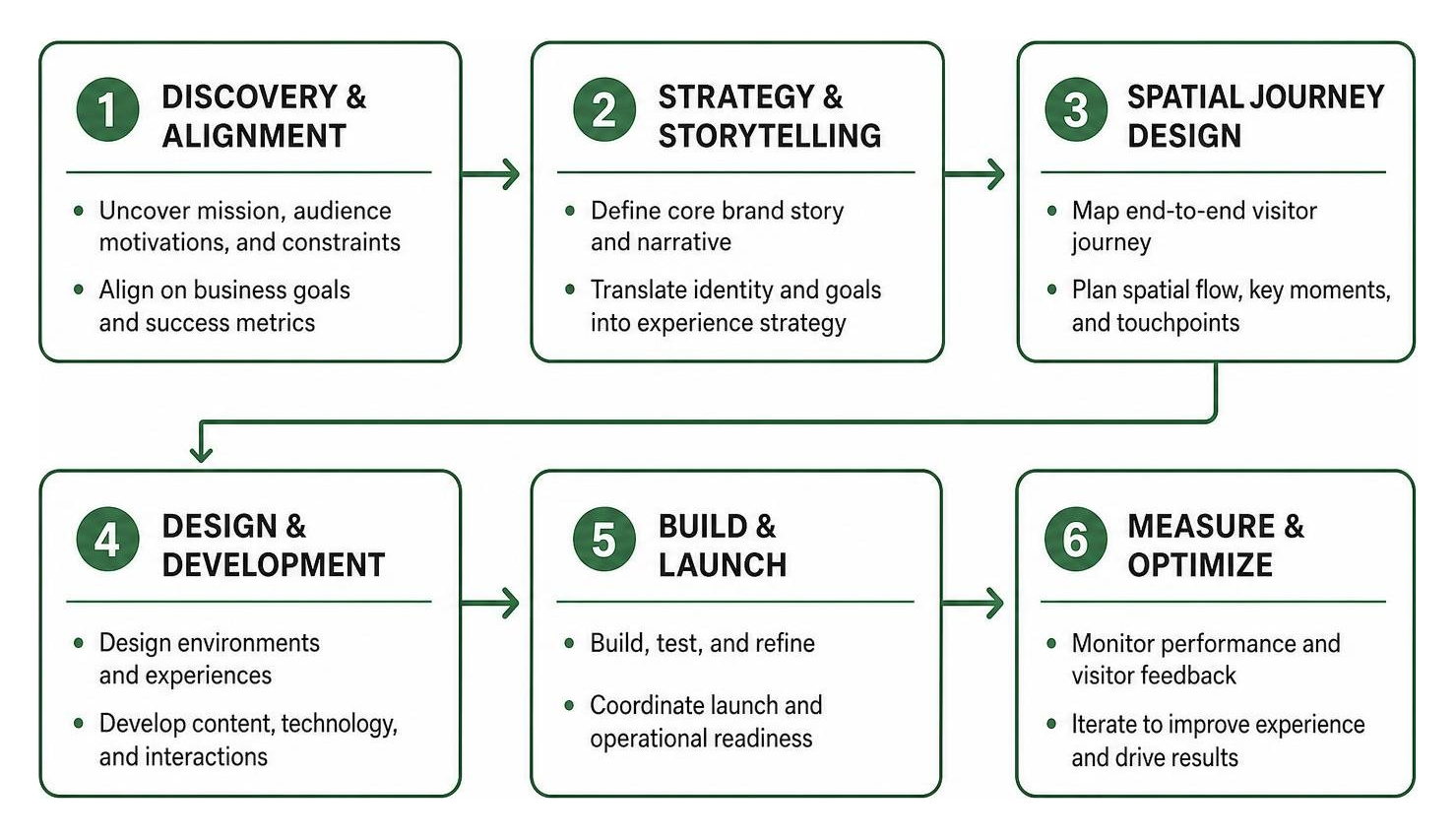
Discovery, Storytelling, and Spatial Journey Mapping
Every successful activation begins with alignment around core identity and business goals. Teams run structured brand discovery and strategy sessions to uncover the organization’s mission, audience motivations, and operational constraints.
During this foundational phase, designers define:
- The Narrative Arc: What core idea should visitors understand, feel, and remember as they enter, explore, and leave the space?
- Visitor Personas & Behavioral Paths: How will distinct audience segments—such as enterprise buyers, casual shoppers, or prospective employees—navigate the footprint?
- Sensory & Emotional Milestones: Where should key reveals, high-energy demonstrations, quiet reflection zones, and conversion points occur?
- Brand Identity Standards: Integrating physical architecture directly with two-dimensional guidelines by defining unified branding and corporate identity across all touchpoints.
Unified Physical and Digital Execution Across Industries
Once the spatial blueprint is set, agencies coordinate cross-disciplinary production teams to bring the concept to life. In retail flagships, this means combining tactile product displays with seamless mobile checkouts and interactive inventory lookups. In corporate headquarters, it means designing innovation briefing centers that let enterprise clients interact directly with complex software ecosystems.
This convergence relies on connecting physical architecture with interactive website design and digital environments. When on-site digital kiosks, mobile companion apps, and physical installations share a unified data layer, the customer journey continues smoothly long after the visitor leaves the building.
Measuring Experiential ROI and Selecting Your Agency Partner
Because physical installations represent significant capital investments, evaluating performance requires clear measurement frameworks and data-backed validation.
How Leading Agencies Measure Impact and Return on Investment
Leading agencies track quantitative business outcomes alongside creative execution. Industry research reveals that 89% of buyers say a live experience was the primary reason they purchased, with live activations lifting other marketing channels and delivering revenue multipliers up to 6.1× and conversion lifts around 71%.
To track these returns accurately, agencies deploy a mix of operational and digital metrics:
- Footfall and Dwell Time Analytics: Using optical sensors and spatial heatmaps to measure visitor volume, pathing, and engagement depth.
- Post-Occupancy Evaluations (POE): Conducting structured surveys, brand recall studies, and sentiment analyses over 30, 60, and 180-day post-launch windows.
- Integrated Conversion Tracking: Pairing on-site QR codes, customized digital wallets, and dedicated URLs with advanced digital strategy and performance tracking to attribute pipeline revenue directly to physical interactions.
- Social Amplification Metrics: Tracking user-generated content, earned media value, and digital shares created naturally by the physical space.
How to Choose the Right Brand Experience Design Agency for Your Business
Selecting the right partner requires looking beyond portfolio visuals to evaluate practical execution capabilities:

- Integrated Multi-Disciplinary Talent: Does the agency keep spatial designers, creative technologists, brand strategists, and copywriters on the same team, or do they outsource critical capabilities?
- Fabrication and Vendor Governance: Can they manage general contractors, AV integrators, and local permitting offices to deliver projects on time and within budget?
- Proven Measurement Methodology: Do they provide clear post-occupancy metrics and financial attribution models, or do they rely solely on aesthetic awards?
- Technological Sophistication: Are their interactive installations built on stable, scalable architectures with clear ongoing maintenance protocols?
- Cultural and Strategic Alignment: Do they understand your commercial goals and industry constraints, ensuring the creative vision drives real business growth?
Frequently Asked Questions About Brand Experience Design
What is the primary difference between experiential marketing and brand experience design?
Experiential marketing typically focuses on short-term, campaign-driven activations—such as weekend pop-up shops, festival sponsorships, or promotional stunt booths designed for quick social buzz. In contrast, brand experience design creates permanent or semi-permanent environments, including retail flagships, corporate briefing hubs, and branded destinations. It integrates architecture, interior design, and long-term customer journeys to build enduring brand equity over many years.
How do experience design agencies blend physical and digital touchpoints?
Agencies build “phygital” ecosystems by embedding responsive technologies directly into the physical environment. This includes IoT sensors that adjust lighting and media when visitors approach, interactive tables that recognize physical products placed on their surfaces, and mobile integration that personalizes on-screen content based on customer profiles. The goal is a unified journey where digital tools enrich spatial exploration rather than distract from it.
Which industries benefit most from hiring a brand experience design agency?
Any organization with physical touchpoints or complex products benefits from experience design. High-impact industries include:
- Luxury & Specialty Retail: Creating brand flagships that turn shopping into an inspiring destination.
- Technology & B2B Enterprises: Building briefing centers that make abstract software or hardware solutions tangible for executive decision-makers.
- Hospitality & Entertainment: Developing multi-sensory resorts, dining concepts, and interactive cultural venues.
- Higher Education & Healthcare: Designing interactive campus welcome centers and patient-friendly wellness environments that build trust and engagement.
Conclusion: Transforming Every Customer Touchpoint into Long-Term Equity
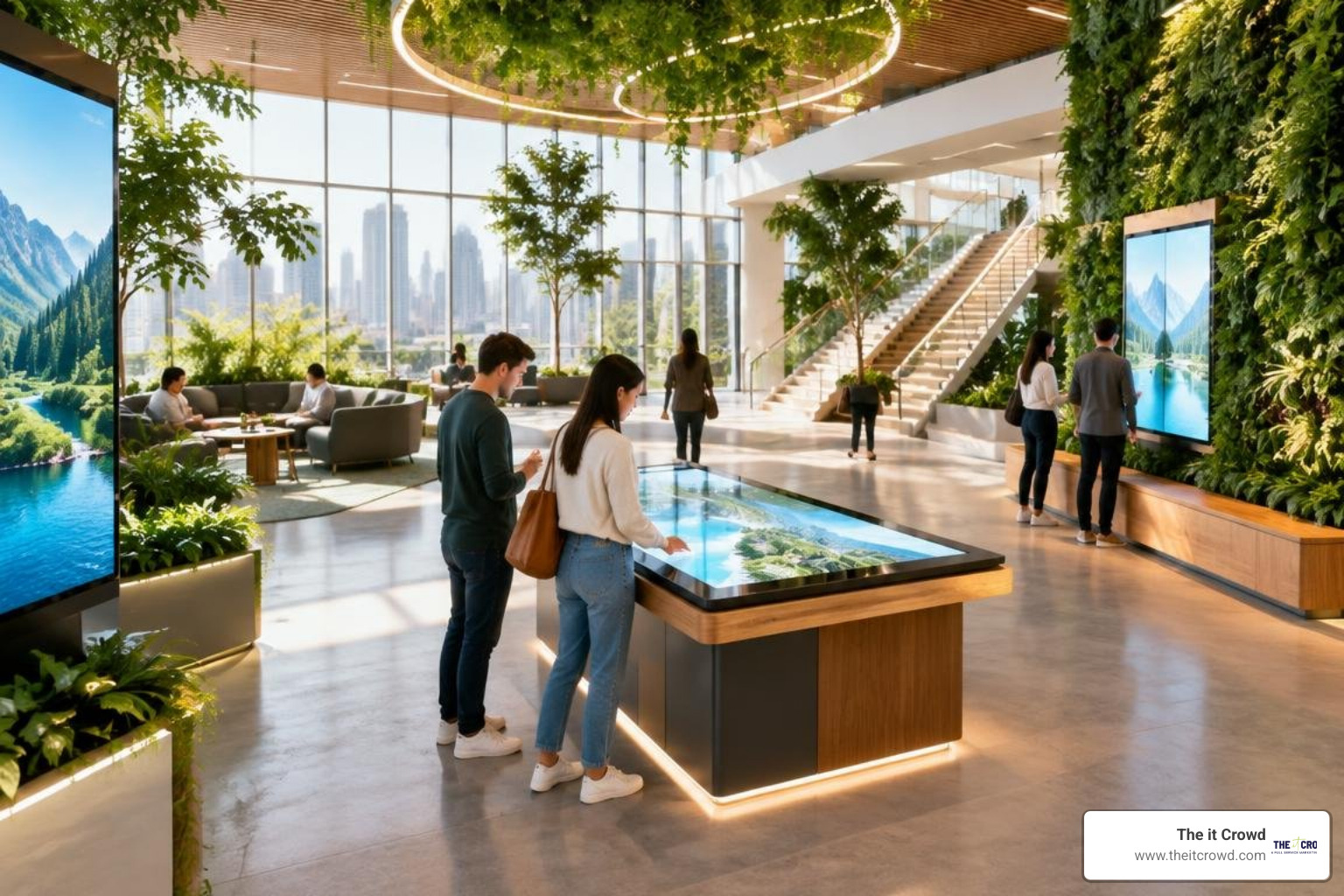
In an increasingly automated marketplace, exceptional real-world experiences are among the most reliable ways to differentiate your business. Moving beyond passive advertising to build immersive, multi-sensory environments allows you to capture attention, deepen customer loyalty, and command premium pricing.
At The it Crowd, we help ambitious businesses navigate this shift by pairing strategic positioning with end-to-end creative execution. Explore our guide on effective branding strategies and execution to see how connecting your brand narrative across every physical and digital touchpoint builds lasting commercial equity.

