

Heard that before? Most businesses treat social media like homework: do it because you’re supposed to, then wonder why it doesn’t work. But it’s not about posting more. It’s about posting smarter.
Consider two restaurants. One dumps daily specials on every platform with stock photos. The other posts three times a week showcasing real customers, behind-the-scenes moments, and answers every comment within an hour. Guess which one has a line out the door?
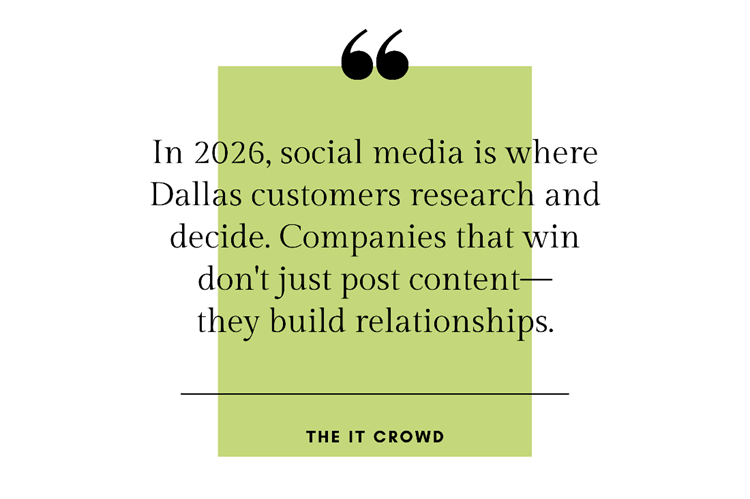
Social media management for Dallas businesses in 2026 isn’t optional anymore. It’s where trust gets built or broken. Your customers are researching, comparing, and deciding who deserves their money. The companies that understand this don’t just post content. They build relationships.
Why Social Media Management Matters for Dallas Brands
This article is for overwhelmed CEOs, marketing directors drowning in tools, and founders who can’t figure out why their social efforts aren’t working.
Here’s a thought experiment: imagine launching a product with zero social presence. No Instagram posts, no Facebook reviews, no LinkedIn updates. Prospects Google you, find nothing current, and choose a competitor whose feed shows real activity.
This is what The it Crowd calls “everlasting thumbprints”—the permanent digital trail that either builds confidence or creates doubt. Social media strategy for local businesses requires customer journey mapping: understanding how prospects move from discovery to decision based on your content.
Dallas brands face unique pressures:
- Competition is fierce across every industry
- Local audiences demand authentic, community-focused content
- Your social presence must prove legitimacy in real time
Getting this right isn’t optional anymore.
Crafting an Effective Instagram Marketing Strategy
Instagram has evolved from a photo-sharing app into a high-intent discovery platform where customers make buying decisions in real time.
Visual Storytelling That Actually Sells
Time spent on the platform has risen by 40% since Reels launched in 2024, transforming casual scrolling into active research. Prospects don’t just browse anymore; they evaluate, compare, and decide based on what they see in your feed.
An Instagram Reel strategy works best for brands that can demonstrate value visually: before-and-after transformations, behind-the-scenes glimpses, product demonstrations, and customer testimonials. An interior designer showing room makeovers will always outperform generic “follow us for tips” posts.
What Works vs. What Wastes Time
Companies that post consistently with strategic intent—mixing educational content, brand storytelling, and community engagement—build audiences that convert. Companies that post sporadically, chase every trending audio, or treat Instagram like a corporate brochure wonder why their follower count stays flat.
The difference isn’t production budget or team size. It’s understanding that Instagram rewards authenticity and consistency over perfection. A well-lit iPhone photo with genuine insight beats a glossy studio shot with nothing to say.
Leveraging Facebook Ads for Local Reach
Facebook remains the most cost-effective platform for reaching local audiences with precision targeting that turns ad spend into actual customers.
Why Facebook Still Dominates Local Advertising
According to DataReportal’s U.S. 2025 report, Facebook’s ad reach in the U.S. was equivalent to 56.8% of the total population.
Facebook marketing works best for businesses targeting specific demographics, running promotions, and building brand awareness within defined geographic areas. Think of Facebook ads like a neighborhood bulletin board that shows your message only to people who actually need your service.
Additionally, Meta Business Suite allows you to manage ads, track performance, and optimize campaigns from a single dashboard while frequency capping prevents your ads from appearing to the same person repeatedly.
Setting Up Campaigns That Convert
Effective Facebook advertising starts with Facebook business page optimization: complete profiles, consistent posting, and verified business information build trust before ads ever run. Then, layering precise audience targeting with compelling creative turns impressions into actual customers walking through your door.
The platform’s strength isn’t reach alone. It’s reaching the right people at the right cost.
TikTok Strategy for Creative Engagement
TikTok’s algorithmic content distribution gives brands unprecedented reach potential, even with zero followers, making it ideal for rapid awareness building.
Why TikTok Works for Dallas Brands
A TikTok marketing strategy in 2026 succeeds by embracing authenticity over polish. The platform rewards creative risk-taking, personality-driven content, and trending formats that feel native rather than advertorial.
TikTok marketing works best for brands willing to show their human side: restaurants revealing kitchen prep routines, contractors explaining common home repair mistakes, salons demonstrating transformation processes. A coffee shop posting their barista’s latte art process can reach 50,000 views overnight without paid promotion.
Creating Content That Converts
Successful TikTok content follows a pattern. It hooks viewers in the first second. It delivers value or entertainment quickly. It ends with a clear reason to follow or visit.
The difference between viral content and ignored content isn’t production quality. It’s whether you’re making something TikTok users actually want to watch, not what you think they should see.

LinkedIn Branding for B2B Growth
LinkedIn isn’t where you go viral with dance trends. It’s where you build the reputation that closes six-figure deals.
Why LinkedIn Matters for B2B Companies
LinkedIn branding for B2B works like a well-tailored suit at a business conference. It signals competence before you even shake hands. While other platforms chase attention spans, LinkedIn captures decision-makers actively researching solutions. Your ideal clients are already there, scrolling between meetings, evaluating potential partners. The question is whether they’re finding you or your competitor.
Building Campaigns That Convert
LinkedIn Campaign Manager lets you target with surgical precision: by job title, company size, industry, even specific companies. This isn’t spray-and-pray advertising. It’s presenting your expertise directly to the CFO who needs exactly what you offer.
Most B2B companies treat LinkedIn like a resume dump rather than a relationship-building platform. They post job openings and company news, wondering why nobody engages. Meanwhile, the companies winning on LinkedIn share genuine insights, spark conversations, and position themselves as the obvious choice when budget discussions happen.
Measuring and Improving Engagement Metrics
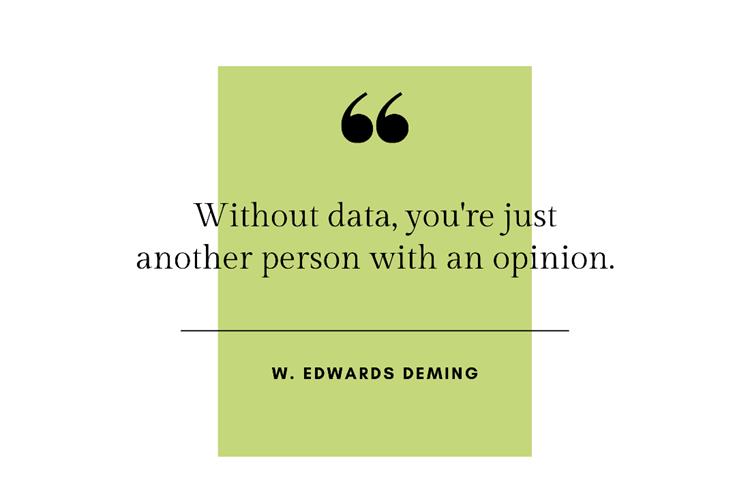
The economist W. Edwards Deming said it best: “Without data, you’re just another person with an opinion.” Social media analytics and reporting transform gut feelings into growth strategies.
Tracking What Actually Matters
Not all metrics deserve your attention. Focus on:
- Engagement rate (likes, comments, shares divided by reach)
- Click-through rate to your website
- Conversion rate from social traffic
- Cost per acquisition for paid campaigns
Connecting Social to Business Outcomes
Google Analytics 4 shows what happens after the click. Which social posts drive demo requests? Which campaigns generate actual revenue? A simple way to make decisions is to follow the North Star Framework: identify the one metric that best predicts business success, then optimize everything toward it.
The 2% Rule for Engagement Rate Optimization
As a general benchmark, if organic engagement rates drop below 2%, your content isn’t resonating. Time to pivot. Build sustainable engagement systems rather than frantically chasing every algorithm change. Strategic brands focus on what drives results, not what the latest guru promises will go viral.
Integrating Social Media with Overall Marketing Strategy
Picture this: A customer sees your Facebook post at lunch, Googles your business that evening, receives your email newsletter the next day, then walks into your store on Saturday. That’s not four separate campaigns. It’s one journey.
Social media thrives when it connects with everything else. Your website design should echo the personality people see on TikTok. Your paid search ads can retarget people who engaged with Instagram but didn’t convert. This is cross-channel attribution in action: social rarely gets the last click but often plants the seed.
Content lifecycle management means getting more mileage from what you create. Turn customer success stories into LinkedIn posts, email features, and Facebook testimonials. Track which formats drive actual demand generation, not just likes.
The it Crowd builds strategies where social, search, email, and your website function as one ecosystem. When channels talk to each other, conversions follow.
FAQ: What Dallas Businesses Want to Know
How do I know if social media is actually working?
Track actions that matter to your business. Social media ROI measurement starts with connecting posts to outcomes: website visits, form fills, phone calls, or sales. Use UTM parameters so Analytics shows which posts drove conversions.
How do I measure, integrate, and scale social media effectively?
Start by defining clear goals tied to business outcomes. Integrate social through consistent messaging across email, website, and ads. Use cross-channel attribution to see how social assists conversions. Scale what works.
How much should I spend on social media marketing?
Many businesses allocate 10-15% of revenue to overall marketing, with a portion for social. Smaller companies might start with $1,000-$2,000 monthly for management plus ad spend.
Should I focus on organic or paid social?
Both. Organic builds community and trust over time. Paid accelerates reach and targets specific audiences. Most successful brands blend the two strategically.
Strategic Takeaways for Social Media Success in Dallas
Social media marketing across Dallas-Fort Worth isn’t about chasing viral moments or racking up followers. It’s about building genuine connections with the people who matter to your business. Focus on platforms where your audience actually spends time. Create content that provides value, not just noise. Measure what drives real outcomes.
The best strategies blend authenticity with consistency. They integrate social with your broader marketing efforts rather than treating it as an afterthought.
The brands seeing results are the ones treating social as part of the business, not a side task. If you’re ready to rethink your approach, contact us to start the conversation.
