

You’ve launched a campaign. The ads look sharp, the messaging feels right, and the creative is polished. But three months later, the results are underwhelming. Sound familiar?
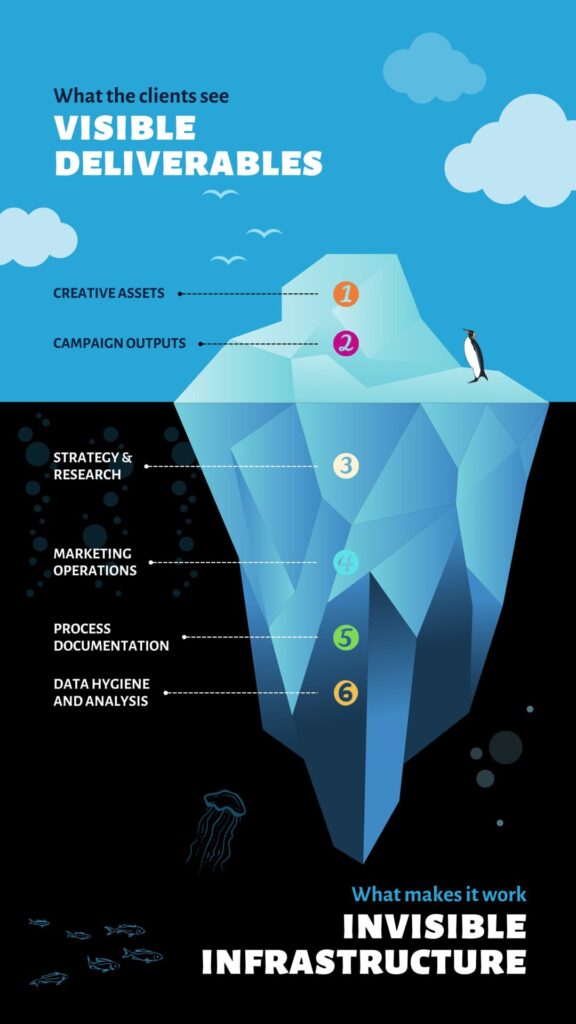
If you’re a business owner or marketing director investing in digital campaigns, you’re likely judging success by what’s visible: the ad copy, the landing page, the social posts. What you see, though, is only about 10% of the work. The other 90%—the behind-the-scenes marketing work—lives beneath the surface, invisible but indispensable.
This is the marketing iceberg. And understanding it is the difference between campaigns that coast and campaigns that convert.
Most discussions about why marketing campaigns fail focus on creative missteps or budget constraints. But the real culprits are hidden deeper: faulty data foundations, misaligned audience targeting, broken tracking systems, and neglected technical optimizations. These aren’t sexy. They don’t photograph well for case studies. But they’re the silent saboteurs that sink campaigns before they ever gain momentum.
In this article, we’re diving below the waterline to reveal the unseen work that separates marketing that merely exists from marketing that actually delivers.
Key Takeaways: What’s Beneath the Surface
- Most marketing failure happens invisibly. Broken tracking, misaligned targeting, and poor data quality sink campaigns long before creative ever gets the chance to perform.
- Behind-the-scenes work isn’t optional. It’s the strategic foundation and technical infrastructure—research, diagnostics, audience segmentation, marketing operations—that makes visible campaigns actually function.
- Stop judging success by polish alone. Evaluate agencies and campaigns by asking about their testing plans, process documentation, and whether they focus on the marketing metrics that matter, not just vanity metrics.
- The prep work determines the outcome. Investing in invisible infrastructure upfront, such as proper tracking, lead routing, and data hygiene, prevents expensive fixes later and delivers measurably better results long-term.
What Is “Behind-the-Scenes Marketing” Work?
So what exactly happens below the waterline?
Behind-the-scenes marketing work is the strategic foundation and technical infrastructure that makes campaigns function. It’s the research, the diagnostics, the tracking setup, the audience segmentation, the A/B test analysis. It’s everything that happens before the ad goes live and after the click comes in.
Most clients never see this layer because it doesn’t produce immediate, tangible deliverables. There’s no flashy creative to approve, no clever tagline to share with the team. Just systematic problem-solving that quietly determines whether a campaign sinks or swims.
Here’s what this looks like in practice: A client comes to us frustrated that their social media content isn’t driving engagement. The posts look polished. The captions are on-brand. But when we run marketing diagnostics, we discover they’re posting when their audience is asleep, their hashtags attract bots instead of buyers, and their content format preferences completely mismatched platform algorithms. These are root cause marketing issues that were invisible to them but fatal to performance.
Why Do Marketing Campaigns Fail Even When Everything Looks Right?
Short answer: because looking right and working right are two different things.
According to a Gartner CMO Survey, marketing budgets have dropped to just 7.7% of overall company revenue in 2024. With tighter budgets and higher performance expectations, every dollar needs to work harder. Yet many campaigns still fail not because of what’s visible, but because of what’s broken underneath.
A campaign can have beautiful design, compelling copy, and flawless execution on the surface while simultaneously suffering from broken attribution, misaligned targeting, or disconnected follow-up systems. The visible elements pass the eye test. The invisible infrastructure fails the performance test.
At The it Crowd, we’ve seen this pattern repeatedly. Companies invest heavily in creative and content while neglecting marketing and sales alignment. Their ads generate leads, but sales never follows up because the CRM integration broke three weeks ago. Or they’re tracking vanity metrics instead of the marketing metrics that matter.
The failure isn’t in what you built. It’s in what you didn’t build beneath it.
The Iceberg Layers: The Hidden Work That Makes or Breaks Campaigns
Let’s break down what’s actually happening beneath the surface. These layers don’t generate applause, but they generate results.
Strategy and Research
Before a single asset gets created, someone needs to answer critical questions. Who is the audience? What do they care about? Where do they spend time online? What messaging has worked before, and what hasn’t? This isn’t guesswork. It’s competitor analysis, customer interviews, market research, and behavioral data synthesis. Getting this foundation right means the creative that follows actually resonates.
Marketing Operations
This is the plumbing of your campaigns. Tag management, tracking pixels, UTM parameters, CRM integrations, automation workflows. When marketing operations run smoothly, data flows correctly and teams can actually measure what’s working. When they don’t, you’re flying blind with broken instruments.
Process Documentation
Who owns what? What happens when a lead comes in? How do we handle campaign requests? Without clear process documentation, teams waste hours clarifying roles, duplicating work, or letting critical tasks fall through cracks. Documentation isn’t bureaucracy. It’s institutional memory that protects performance when people are out or when teams scale.
Data Hygiene and Analysis
Marketing data quality determines decision quality. Financial and business leaders are moving away from surface metrics and investing in deep data analytics to actually predict outcomes. If your CRM is full of duplicates or your analytics platform tracks bot traffic as real users, every decision becomes guesswork. Regular audits, list maintenance, and validation processes keep your data reliable and your strategies grounded in reality.
How Behind-the-Scenes Work Change Outcomes
Here’s a scenario we see often: A company runs paid campaigns across multiple platforms. They’re spending money, generating clicks, and seeing some conversions. When asked which channel actually drives the best results, though, they’re making educated guesses at best.
The visible elements looked fine. The real issue was in the foundation. Their tracking hadn’t been reviewed in years, their audience targeting was too broad, and their follow-up process left leads sitting in limbo for days.
We started with the basics. Cleaned up their audience segments. Set up proper tracking so they could see what was actually working. Built a simple lead routing system so inquiries got to the right person within an hour instead of getting lost in inboxes.
The outcome? They started seeing which platforms delivered qualified leads worth pursuing. They tightened their targeting on the channels that mattered and stopped wasting budget on the ones that didn’t. Lead response time dropped from days to hours, and their conversion rate improved by 35% in eight weeks.
Same ad creative. Same basic strategy. The systematic fixes beneath the surface made the difference.
Our Approach: Building the Foundation Before the Launch
At The it Crowd, we don’t start with creative. We start with questions.
What’s working right now? What’s not? Where are leads getting stuck? What does the data actually say? This diagnostic marketing approach means we’re not guessing or following industry trends blindly. We’re looking at your specific situation and identifying the hidden friction points that hold performance back.
From there, we build the infrastructure that makes campaigns sustainable. Proper tracking setup. Clear marketing operations workflows. Audience research that goes beyond demographics. Regular performance audits to catch problems before they compound.
Here’s what sets our approach apart—we treat the invisible work as seriously as the visible deliverables. A well-designed ad means nothing if it’s targeting the wrong people or if leads disappear into a broken follow-up system. So we focus on both layers: the creative you’ll share with your team and the operational foundation that makes it perform.
What Working With The it Crowd Looks Like Below the Surface
Abraham Lincoln once said, “Give me six hours to chop down a tree and I will spend the first four sharpening the axe.” That’s how we approach campaigns. Before anything goes live, we sharpen the infrastructure.
Here’s what that actually involves:
- Initial Audit and Discovery – We review your existing setup to identify gaps in tracking, targeting, and process documentation. This reveals what’s broken before we build anything new.
- Systems Setup – We establish proper tracking, integrate your tools, and create workflows that connect marketing activity to actual business outcomes.
- Marketing Testing and Iteration – We don’t launch and walk away. We test variables, analyze performance, refine targeting, and adjust messaging based on real data.
- Ongoing Monitoring – Regular check-ins ensure nothing breaks, data stays clean, and campaigns stay aligned with your goals.
How to Evaluate Behind-the-Scenes Marketing Success
Stop evaluating marketing solely by what you can see in the final deliverable. A beautiful ad with weak targeting fails. A solid messaging framework with broken attribution wastes budget.
Start asking about the work beneath the surface. When reviewing a proposal or campaign report, ask: What research informed this strategy? How are we tracking performance? What audience segmentation are we using? Is our brand positioning backed by customer data or assumptions?
For example, if an agency presents a new campaign, don’t just assess the creative. Ask about their testing plan, their lead routing process, and how they’ll measure success beyond vanity metrics.
In short: judge marketing by the system that supports it, not just the polish on top. The invisible infrastructure determines whether campaigns generate genuine results or just look good failing.
Frequently Asked Questions
Q: Why does setup take so long?
Because rushing setup means spending months fixing avoidable problems. Proper audience segmentation, tracking configuration, and privacy compliance (GDPR, CCPA) require time upfront—but they prevent costly mistakes down the line.
Q: Can’t we just focus on getting ads live quickly?
You can, but you’ll likely waste budget on poorly targeted campaigns with broken tracking. Fast launches look productive. Proper preparation actually produces results.
Q: How do I know if the behind-the-scenes work is actually happening?
Ask your agency about their process. Are they auditing your current setup? Mapping your lead lifecycle? Building documentation? If they jump straight to creative without asking strategic questions, they’re skipping the foundation.
Q: Is this extra work worth the investment?
The behind-the-scenes work isn’t extra—it’s essential. Campaigns built without it consistently underperform, waste budget, and require expensive fixes later. Investing in the invisible layer upfront saves money and delivers better results long-term.
