
Digital trust is now measurable. In 2026, ad and email algorithms evaluate it the same way search and social systems do: through consistency, accuracy, and credibility.
If your campaigns send mixed signals, both Google Ads and inbox filters will slow or stop your delivery.
This post connects directly with What the Algorithm Wants This Holiday Season, How Search Algorithms Are Changing Again in 2026, and The Secret Life of Social Algorithms in 2026. Together they form one framework for building lasting visibility across every channel.
Ad algorithms now grade reliability
Ad systems no longer rely only on clicks or bids. They track how often your creative, copy, and landing page align. A Google Ads Help report confirmed that campaigns with consistent message-to-page alignment scored 18 percent higher in quality ratings and paid 12 percent less per click.
To meet the new standard:
- Use one headline phrase across all ad types.
- Match that phrase in your landing page H1.
- Avoid frequent edits that reset the algorithm’s learning phase.
- Keep load times under 3 seconds on mobile (Think with Google).
- Include clear conversion elements above the fold.
The it Crowd applies this same structure in paid media audits, mapping each ad group to a corresponding landing page and verifying language consistency before launch.
Conversion modeling is replacing manual targeting
Automated systems now train on conversion data, not demographic filters. The more accurate your event tracking, the better the algorithm learns your audience.
Follow these steps:
- Configure conversion tags for every primary action—form fill, download, sign-up, or call.
- Test events monthly for accuracy in Google Tag Manager.
- Use first-party data lists instead of purchased segments (HubSpot research).
- Feed offline conversions back into the ad platform.
Google’s Performance Max documentation shows that advertisers using complete conversion feedback improve return on ad spend by 20 to 25 percent.
Ad frequency and fatigue detection
Meta and LinkedIn now limit exposure when your ads repeat too often without engagement. Their AI models measure “ad fatigue” by counting scroll skips and low dwell time (Meta for Business and LinkedIn Marketing Solutions).
Avoid waste by:
- Running frequency caps of 2–3 impressions per user per day.
- Refreshing creative every 10–14 days.
- Rotating formats—carousel, single image, short video—to keep attention.
These small adjustments maintain visibility without training the algorithm to throttle your reach.
Email algorithms use the same trust logic
Email filtering systems mirror ad logic. They track sender reputation, content accuracy, and engagement over time. In 2026, large mailbox providers use AI to predict whether each message will receive a positive response before it reaches the inbox (Litmus State of Email 2025).
Your job is to prove reliability through clear signals:
- Authenticate with SPF, DKIM, and BIMI (Google Postmaster Tools).
- Send on a fixed schedule; avoid spikes or long silences.
- Keep open rates steady above 20 percent.
- Reduce bounce rate below 2 percent.
- Use consistent “from” names and domains.
Return Path’s 2025 Deliverability Benchmark showed that authenticated domains achieved inbox placement 91 percent of the time, compared with 68 percent for unauthenticated senders.
The it Crowd incorporates this setup in every automation workflow. Each client receives an authentication review and a deliverability report before campaign rollout.
Content-to-link ratio
Filters now evaluate the ratio of text to links. Too many links lower trust. Maintain one primary link for every 100 words and keep all URLs from your verified domain (Campaign Monitor).
Email algorithms also score word balance. Avoid heavy use of promotional terms such as “free,” “limited,” or “guaranteed,” which are documented spam triggers (Mailchimp guide).
Data hygiene affects every channel
Ad and email systems both rely on clean data inputs. Outdated or duplicated lists can cause disqualification from automated bidding models (Statista Marketing Data 2025). Keep your records accurate by:
- Purging inactive contacts quarterly.
- Verifying domain lists for expired addresses.
- Removing contacts that never open after 90 days.
- Tagging audiences by recent activity, not by old imports.
Platforms prefer smaller, verified lists that show real engagement over large but inactive ones.
How to connect ad, email, and search
Algorithms now cross-reference domains and content signals. When your landing pages, ads, and email templates share design and language, trust increases across all platforms.
This connection reinforces your visibility gained from How Search Algorithms Are Changing Again in 2026 and your engagement from The Secret Life of Social Algorithms in 2026.
To align everything:
- Use the same verified domain for ad destinations and email links.
- Reuse key phrases from landing pages in ad copy and email headlines.
- Track attribution through UTM parameters shared across all campaigns.
- Compare open rates and CTR trends side by side each week.
The it Crowd’s campaign dashboards combine these metrics into one report. That view lets marketing and IT teams see how search, paid, and email performance influence one another.
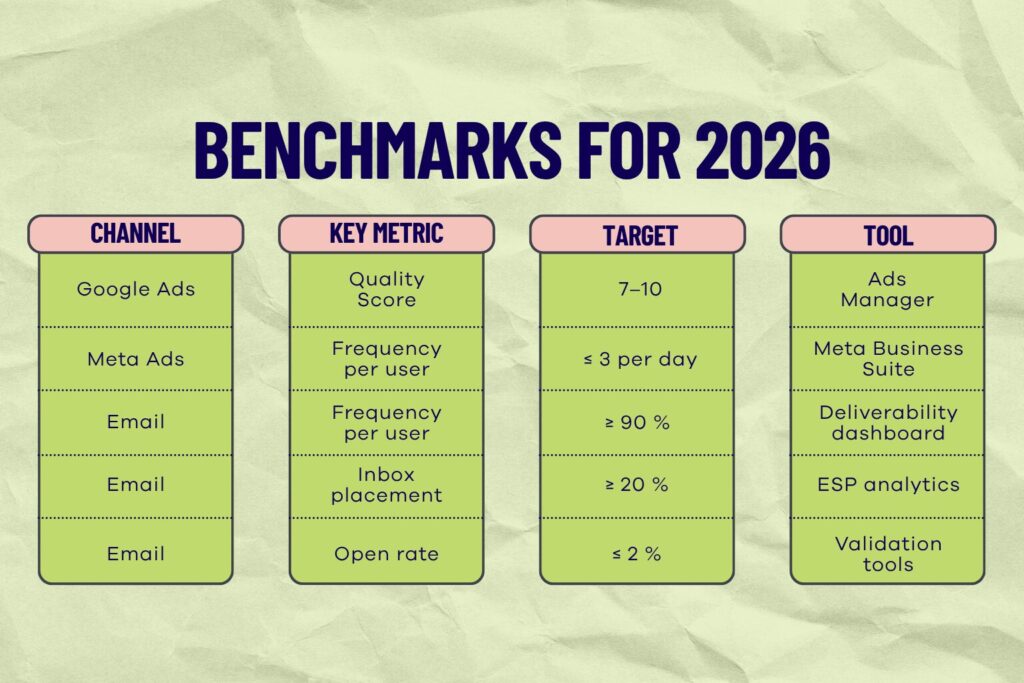
Track these monthly. Falling below these numbers means the algorithm is losing confidence in your domain or campaign consistency.
Mistakes that reduce trust
- Changing ad headlines weekly without re-training.
- Sending bulk email after long inactivity.
- Linking ads or newsletters to unverified subdomains.
- Ignoring failed conversion events.
- Mixing promotional and transactional messages from one address.
Each action weakens domain credibility and resets learning models.
Quick workflow for improvement
Step 1: Audit your entire marketing domain. Confirm authentication, consistent branding, and linked analytics.
Step 2: Rebuild your ad structure with message-to-page alignment.
Step 3: Create a 90-day send calendar for email to stabilize volume.
Step 4: Feed accurate conversion data back to ad platforms monthly.
Step 5: Review CTR, open rate, and inbox placement side by side.
This process builds measurable trust in both systems.
The it Crowd’s unified approach
The it Crowd helps brands combine search, social, paid, and email performance into one reliable framework. Their audits evaluate both creative accuracy and data hygiene. By aligning structure across every channel, they help clients improve deliverability, ad relevance, and overall visibility.
Their Resource Hub includes examples of trust-score improvement projects and email authentication templates that match these 2026 standards.
Looking ahead
In 2026, ad and email success depends less on volume and more on verified integrity. Algorithms no longer reward activity—they reward accountability.
Keep your domain authenticated, your message consistent, and your data clean.
When you connect these practices with the clarity principles from What the Algorithm Wants This Holiday Season, the structure lessons from How Search Algorithms Are Changing Again in 2026, and the engagement patterns from The Secret Life of Social Algorithms in 2026, you build a marketing system that every algorithm can trust.
That trust is what keeps your campaigns visible, delivered, and performing in 2026 and beyond.
